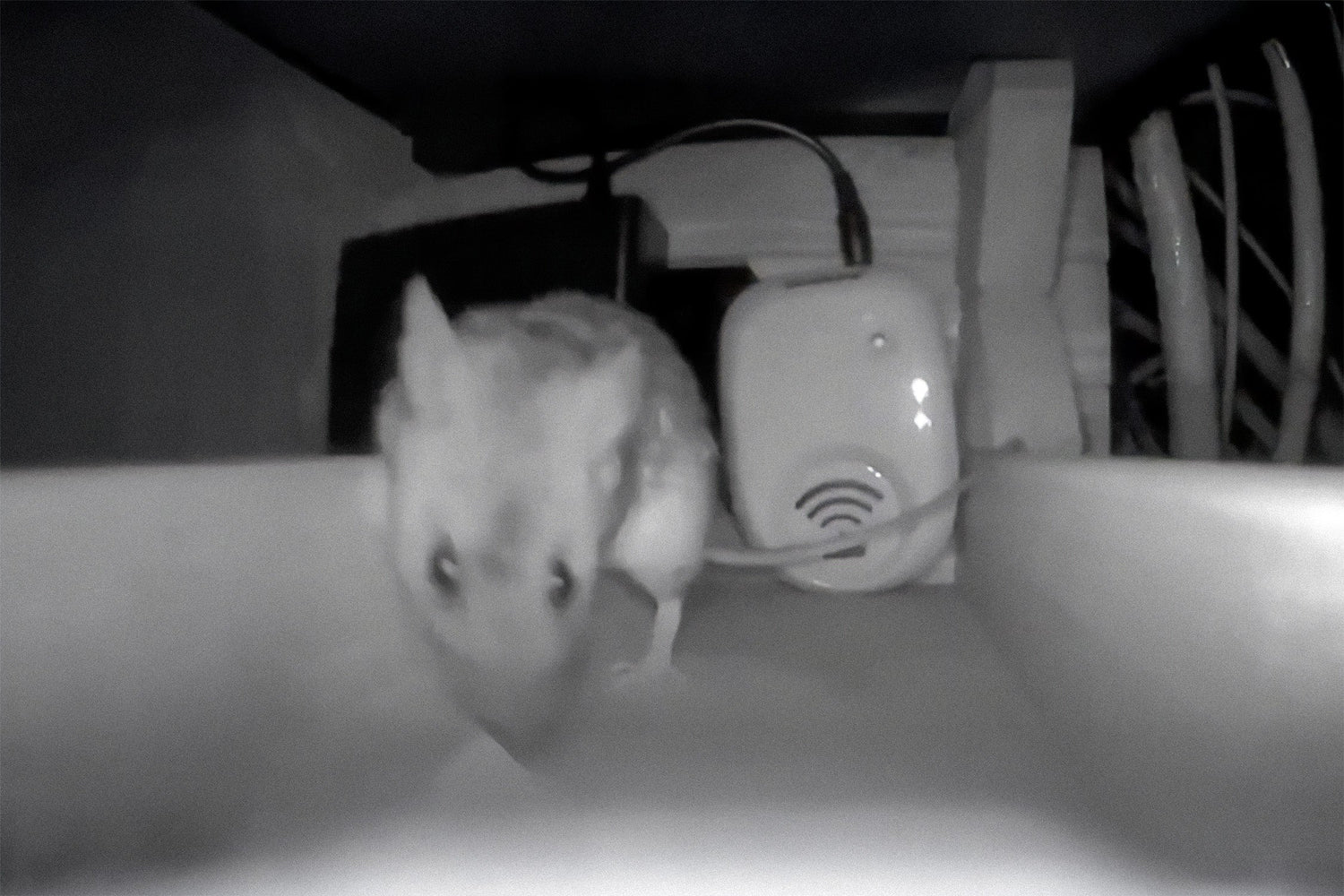
For years, Swedes have been buying ultrasonic scarers in the hope of getting rid of mice and rats. The market has exploded. The devices are sold in DIY stores and online. But many people report the same thing: They don't work. The Swedish Homeowners' Association has even described the products as a pure scam. Now Swedish research - in a project involving Luleå University of Technology - shows why they fail. And above all: what actually makes the rodents flee.
Anna and Johan in Norrköping are two of those who have tried everything. They had been having problems with mice for months. Gnaw marks on the insulation. Tracks along the walls. Nights filled with scratching noises.
- We first tried traps. Then we bought an ultrasonic scarecrow. When that didn't work, we bought two more. Three in total," says Johan.
For a short while, it seemed promising. But just a week later, the noises were back.
- It felt like we were being cheated. You start questioning everything. Why does nothing work? Why do they keep coming back? says Anna.
Anna and Johan are far from alone. And it was this very question - why do mice turn? - that caught the attention of Swedish researchers.

The breakthrough in Luleå: "We saw how mice react to their own warning signals"
At Luleå University of Technology, Professor Örjan Johansson and his team wanted to find out why common ultrasonic scarers stop working. In advanced tests, they quickly saw the problem:
- Mice stop responding to monotonous sounds. The brain filters them out, just like you get used to a fan or a refrigerator," says Örjan Johansson.
The real breakthrough came when scientists started to study how mice communicate danger with each other instead. When a mouse detects a threat, it sends out short, unpredictable ultrasonic signals - a kind of warning code to which other mice react instinctively. When the researchers recreated these natural warning patterns, everything changed: the mice turned and fled immediately.
- It is the reptile brain that reacts. The signals are perceived as acute danger to life and trigger the escape reflex," says Örjan Johansson.

SLU confirms efficacy in new pilot study
The Swedish University of Agricultural Sciences (SLU) then conducted an independent pilot study to verify the results from Luleå. The tests showed the same thing: the mice did not react to standard, monotonous ultrasound - but immediately fled when exposed to the changing warning patterns. This was the final proof that the technology works in practice. This is the foundation on which Repello is being built as it begins to be used in more and more Swedish homes.