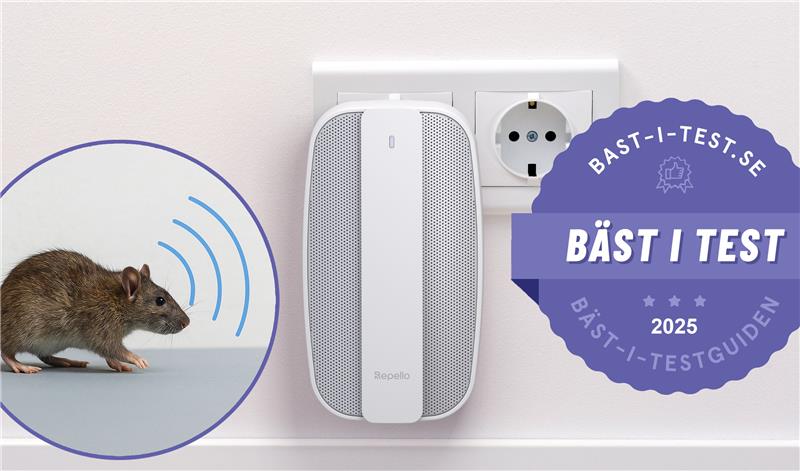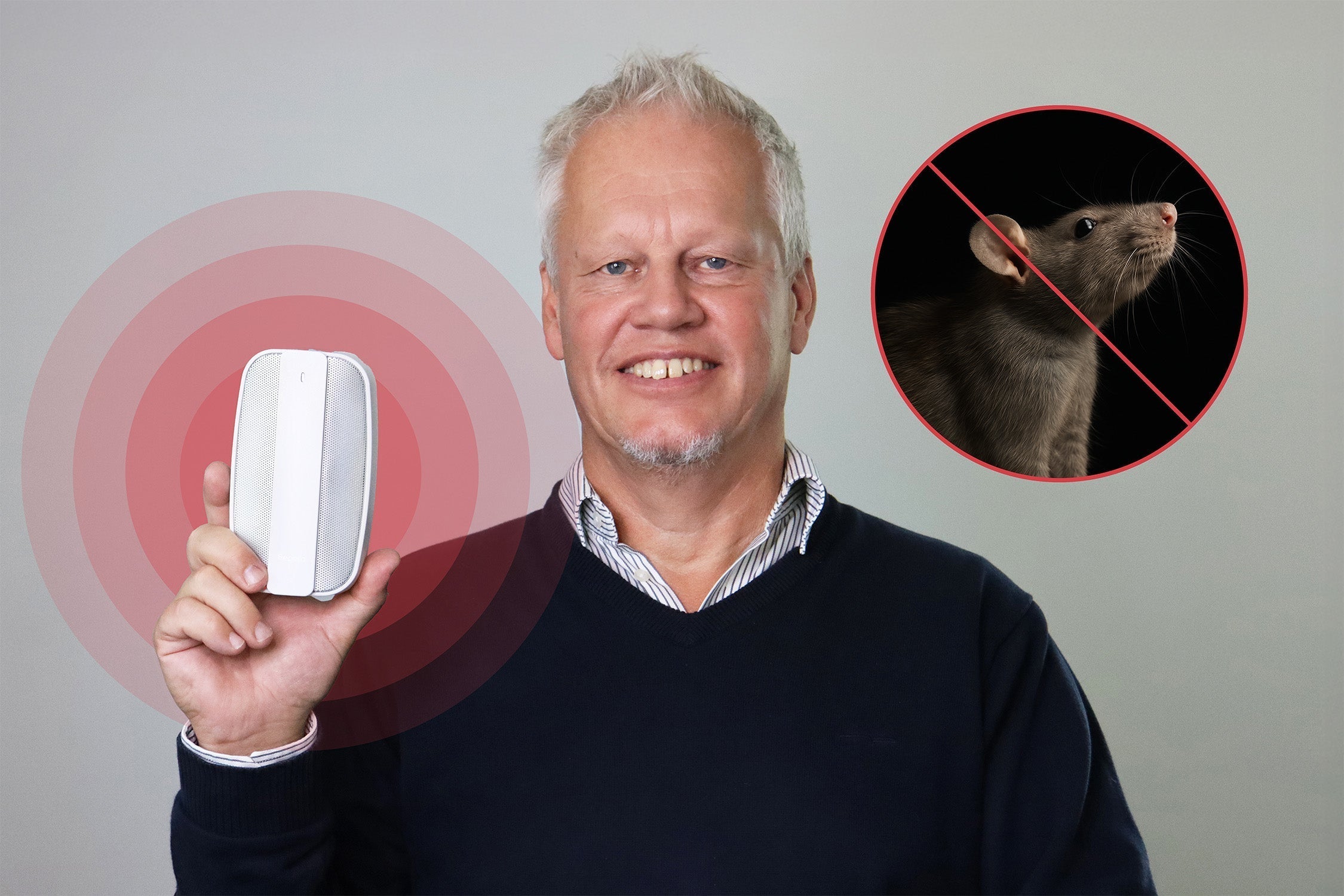
Ultrasonic Rat repellers have been on the market for over forty years. But despite hundreds of models and thousands of promises, only one product - Repello - has been scientifically tested and shown to be effective against rats. This is according to Professor Örjan Johansson at Luleå University of Technology, who led the research behind the technology.
- Many products are marketed with big words, but lack any scientific basis. It is not uncommon to sell devices that basically do nothing at all," says Örjan Johansson.
Both the Swedish Consumer Agency and the Swedish Homeowners' Association have long warned against misleading marketing of electronic pest controllers. As early as the 1990s, the Swedish Homeowners' Association described large parts of the market as "scam products", as the devices had no documented effect.
The Swedish Consumer Agency has repeatedly pointed out that companies claiming efficacy without scientific evidence may be guilty of misleading marketing - which can lead to bans and sanctions.
Common scams - and why they're not true
❌ "Covers up to 300 square metres"
Many devices claim to cover huge areas - sometimes entire houses. But ultrasound doesn't work that way.
- High frequency sound waves are quickly attenuated in air. Even after a few metres, the effect is very weak. It is therefore completely unrealistic that a small device could affect an entire house," explains Örjan Johansson.
In laboratory tests, it has been found that the effectiveness drops off dramatically within 2-3 metres, depending on the room. Claims of "hundreds of square metres" are therefore a sham.
❌ "Goes through walls"
Another common claim is that sound travels through walls and spreads between rooms. But this is physically impossible.
- Ultrasound is effectively stopped by solid materials such as wood, concrete and plaster. "If you have the scare in the kitchen, you can hardly hear it in the living room," says Örjan Johansson.
Ultrasound cannot penetrate walls, furniture or floors. Therefore, one unit is required in each room if you want to cover multiple surfaces - but most scam products never mention that.
❌ "Sends pulses through the power grid that scare away rats"
Some manufacturers claim that their devices "send electrical pulses" through the house's electrical wiring that are supposed to create vibrations or disturbances that scare rats into the walls. It sounds technical - but it's a scam.
- Sound and electricity are two completely different things. Sound is the mechanical vibration of air, while electricity is the movement of electrons in metal wires. Sending out small electrical pulses in wall sockets cannot affect rats at all," says Örjan Johansson.
In addition, such weak signals are filtered out by transformers, fuses and appliances in the home. No scientific study has ever shown that mains-based scares work.
The discovery - the secret language of rats
Behind Repello is several years of research in bioacoustics and animal behaviour at Luleå University of Technology (LTU), led by Professor Örjan Johansson. The breakthrough came when the researchers discovered something that has long eluded science: that rats communicate danger through a special tooth squeak - an ultrasound-like warning sound that only other rats can perceive.
- When a rat feels threatened, it grinds its teeth in a specific way. The sound acts as a reflexive warning to the pack - a sign of mortal danger, explains Örjan Johansson.
For other rats, this sound is an immediate signal to flee. Just as humans pull their hand away from a hot surface without thinking, rats react to their warning sound instinctively - it triggers sheer panic.
The science behind the technology
The research team at LTU analysed and recreated the rats' natural warning sounds using high-resolution sound analysis. By amplifying and varying the frequency, pulse and rhythm, they were able to create a signal that mimics a giant rat calling out for danger - a sound that other rats interpret as a direct threat.
- Rats don't need to learn to escape from sound. It is deeply programmed into their nervous system," says Örjan Johansson.
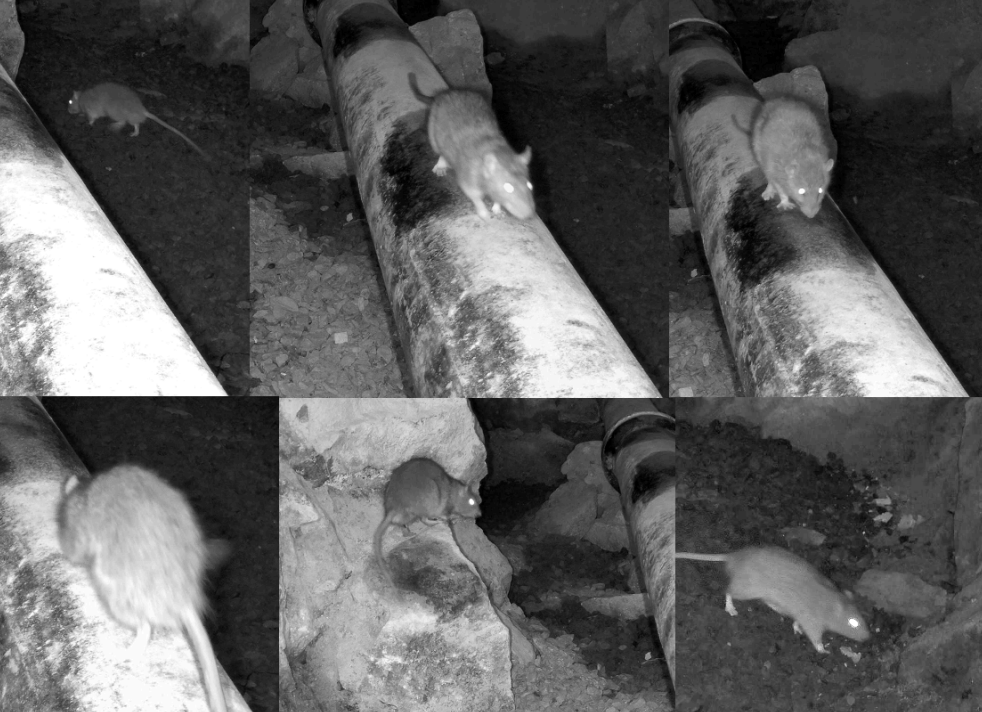
Together with the Swedish University of Agricultural Sciences (SLU), the technology was tested in both laboratory and real-life environments. The results were unequivocal: the rats fled the area immediately when Repello was activated - and did not return, even though both food and shelter remained. Repello is thus the only rat deterrent in the world with documented scientific efficacy, based on the rats' own language.