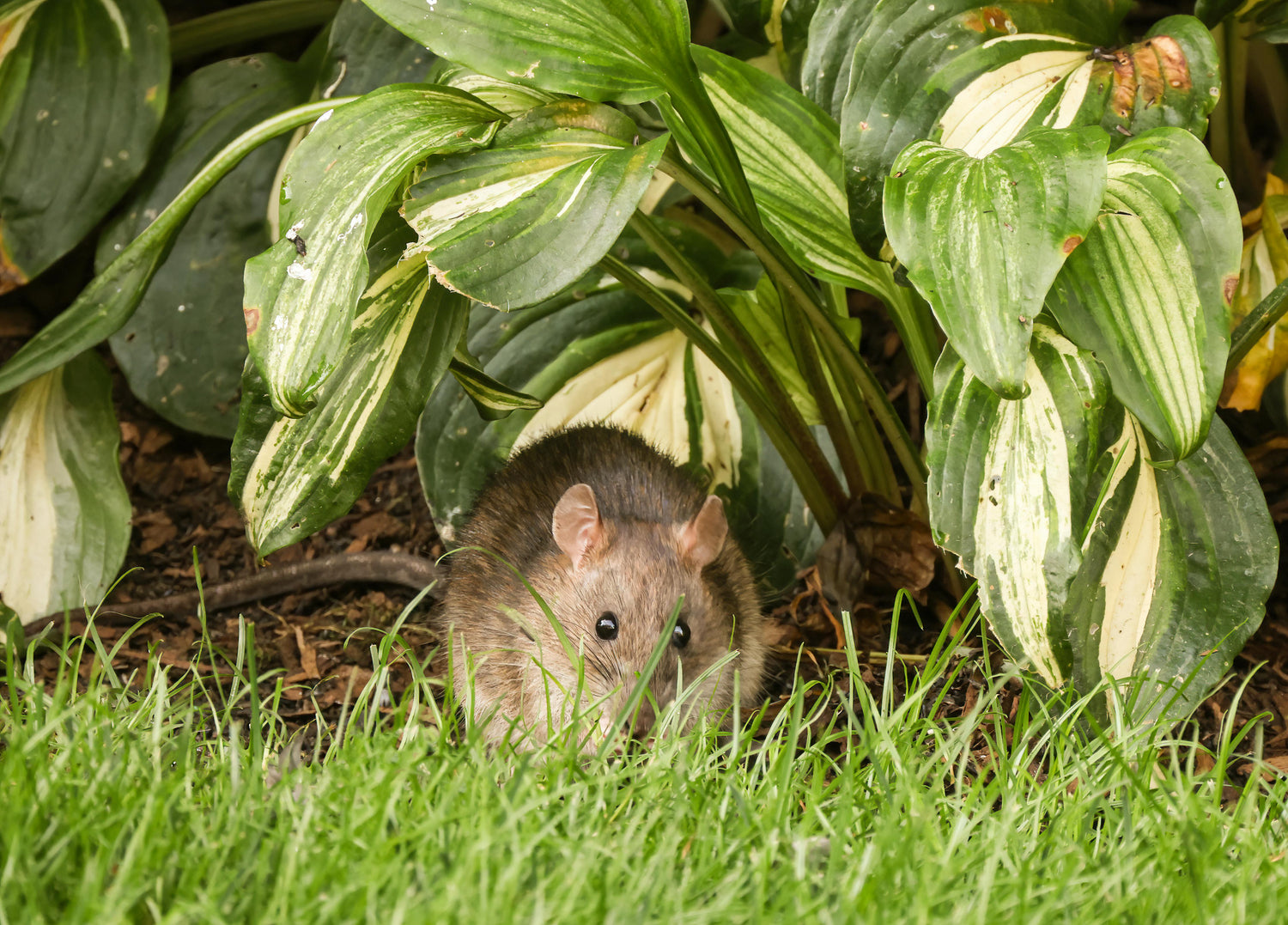
Rats on your property are a more common problem than many people realize—especially during autumn and spring, when they search for new food sources and shelter. Rats thrive outdoors and can establish themselves under decks, in compost piles, among garden waste, and along walls. Acting early is important, as an established colony can grow quickly and eventually move indoors.
In this guide, we'll explain why rats are attracted to your property, what signs to look for, and which control methods actually work.
Why Are Rats Attracted to Your Property?
Rats are looking for three things: food, water, and shelter. Even a well-maintained garden can unknowingly provide all three.
Compost piles are one of the most common reasons rats appear on a property. Food scraps—especially meat, fish, and cooked food—are highly attractive to rats. Even compost containing vegetable waste can attract them, particularly if the pile is not hot enough to deter pests.
Bird feeders are another major attraction. Seeds and food that fall to the ground provide an easy food source, and rats quickly learn to patrol beneath feeding stations.
Other common attractants include:
- Fruit that falls and rots beneath trees
- Compost bins without tightly sealed lids
- Pet food left outdoors
- Firewood piles, stacks of lumber, and other materials that provide shelter and hiding places
Signs of Rats in the Garden
Rats are not always easy to spot directly. They are primarily nocturnal and tend to stay hidden. However, there are several clear signs to watch for.
Droppings are the most common indicator. Rat droppings are dark, elongated, and approximately 1–2 cm long, resembling olive pits. If you find droppings along exterior walls, beneath deck stairs, or near a compost pile, it's a strong warning sign.
Gnaw marks on deck wood, tree roots, plastic containers, or cables are another indication of rat activity. Rats must gnaw constantly to keep their teeth from overgrowing, leaving behind sharp, distinctive marks.
Runways are paths that rats create along walls and fences. Grass may appear flattened, or you may notice worn tracks in the soil alongside buildings.
Burrow holes in the ground—often near walls, fences, or compost areas—may serve as entrances to rat nests.
Damage Rats Can Cause
Outdoor rats are a problem in themselves, but they can also cause significant damage.
They may chew through irrigation hoses and outdoor electrical cables. They can consume seeds and vegetables in raised beds and dig beneath building foundations if suitable entry points are available.
Most importantly, rats on your property are often only one step away from entering your home. They follow established runways and systematically explore their surroundings. A crack in the foundation or a gap around a ventilation opening can be enough for them to gain access.
What You Can Do – Effective Control Methods
There are several ways to make your property less attractive to rats and deal with an active infestation.
Remove Food and Shelter Sources
The most important step is eliminating whatever is attracting the rats. Cover compost piles with secure lids, collect fallen fruit regularly, and bring pet food indoors at night. If you have an active rat problem, consider temporarily removing bird feeders.
Seal Entry Points to the House
Inspect your home's foundation carefully. Seal holes and gaps using steel wool or cement, as rats cannot chew through metal. Close openings around pipes and utility lines entering the building.
Traps
Rat traps are an effective tool for active outdoor infestations. Place traps along rat runways and near suspected nesting sites.
Both snap traps and live traps can be effective, but snap traps are generally faster and easier to manage. If a trap produces no results after three to four days, move it to a different location. Rats are cautious around unfamiliar objects and quickly learn to avoid them.
Poison Bait
Poison bait can be effective but should be used with extreme caution, particularly if children, pets, or wildlife are present.
Always place bait inside a locked bait station—never directly on the ground. Keep in mind that poisoned rats can make birds of prey, foxes, and other predators sick if they consume them.
Professional Pest Control
For established infestations, hiring a professional pest control service is often the most effective solution. Professionals can identify nesting areas, place bait strategically, and provide long-term recommendations for securing your property.
Prevention – Keeping Rats Away
Once you've dealt with an infestation—or if you want to prevent one—the goal is to make the environment as unattractive as possible.
Tall grass, cluttered spaces beneath decks, and piles of building materials provide ideal hiding places for rats. Keep the lawn trimmed, remove unnecessary clutter, and eliminate dark, sheltered areas around outdoor structures.
Electronic repellents that emit ultrasonic sound waves can be used as a supplementary measure in enclosed spaces, such as garden sheds or storage buildings. The Repello Rat Repeller is one such option, designed to provide preventive protection in sheltered areas. However, it's important to remember that ultrasonic devices have limited effectiveness in open outdoor environments where sound waves dissipate quickly.