The Spanish slug is one of the most widespread invasive species in Sweden. It can destroy an entire growing season in a matter of nights, eats most things it finds, and lacks the natural predators that limit native slug populations. Nevertheless, it is possible to keep them under control — if you know which methods actually work.
This guide gives you the full picture: what the Spanish slug is, how to recognize it, why it thrives in your garden specifically, and which measures give the best results.
What is a Spanish slug?
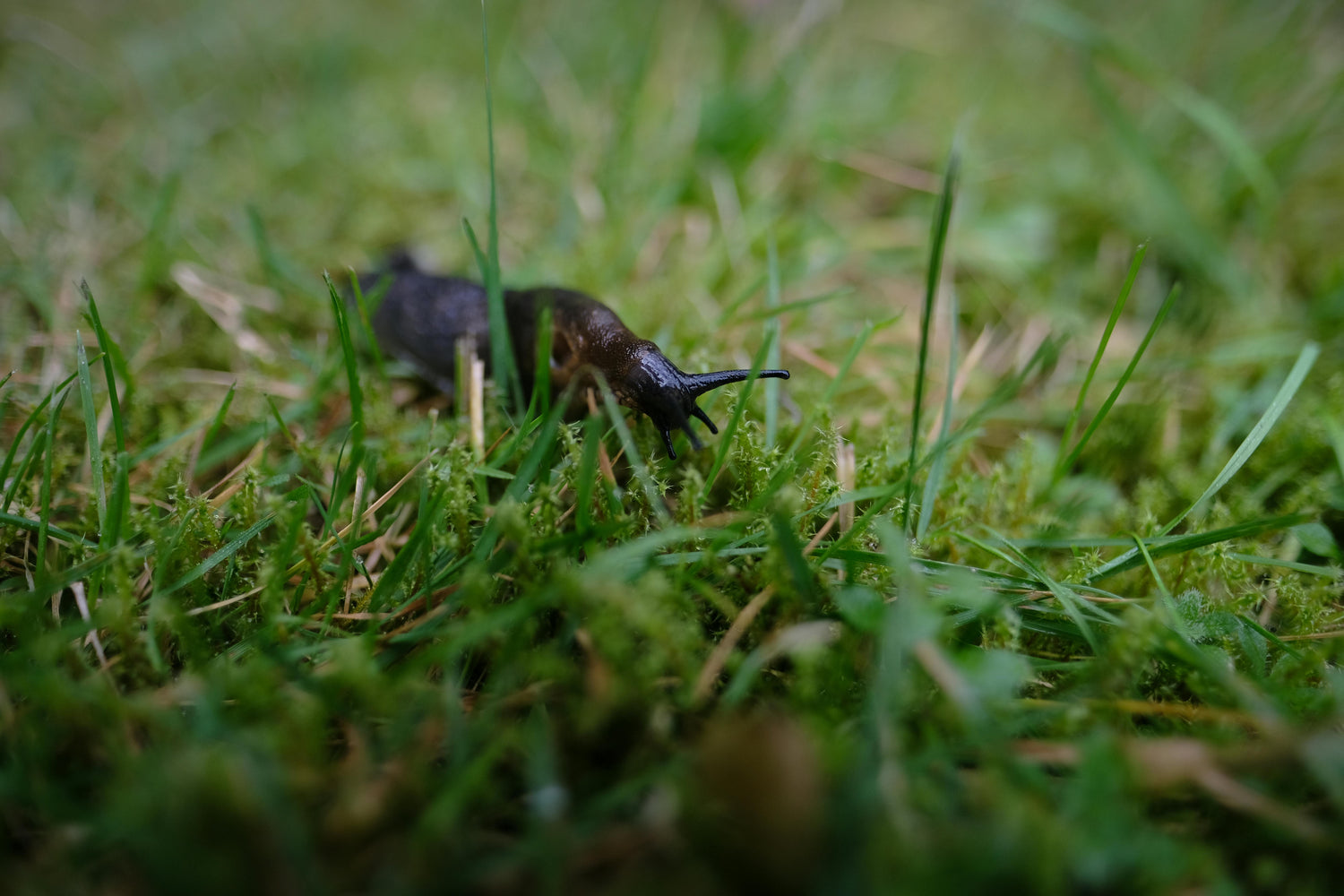
The Spanish slug — officially called Arion vulgaris — is an invasive species originally from southern and western Europe. It has spread across large parts of Europe and has colonized vast areas over recent decades.
The Spanish slug is large, fast, and eats almost anything. It outcompetes native slugs, lacks most natural predators, and reproduces very effectively. A single slug can lay up to 400 eggs per season.
How do you recognize the Spanish slug?
The Spanish slug is clearly different from native slugs if you know what to look for:
- Size: 10–15 cm when fully stretched out, by far the largest slug in your garden
- Color: varies from reddish-brown and orange to dark grey and almost black — but always a single, uniform color. The underside is lighter, often orange to yellow.
- The slime: orange-colored or reddish — one of the most reliable identifying features
- Movement pattern: faster and more active than native slugs, most visible at dusk and dawn, and after rain
Native slugs such as the garden slug and the field slug are smaller, have more distinct patterns, and leave white slime. If you find a large, uniformly colored slug with orange slime — it is a Spanish slug.
What does the Spanish slug eat — and what attracts it to your garden?
The Spanish slug is one of nature's most versatile eaters. It prefers young, juicy plants and causes the most damage early in the season when the plants are at their most vulnerable. Popular targets in the garden:
- Lettuce, spinach, and other leafy vegetables — often eaten completely
- Strawberries and ripe fruits close to the ground
- Bean plants, cabbage plants, and squash
- Young flowering plants and annual bedding plants
What sets the Spanish slug apart from native slugs is that it also eats dead animals, feces, and fungi — which makes it harder to lure away with specific baits. Moisture and dense ground cover are the strongest attractants: a densely planted flower bed with moist soil and hidden spots under boards and stones is an ideal slug habitat.
Season — when is the Spanish slug most active?
The Spanish slug is active from early spring to late autumn, with peaks in May–June and again in August–September. The eggs overwinter in the ground and hatch early in spring, which means the damage from the smallest slugs is often noticed when young plants are put out.
Slugs are nocturnal and move the most at dusk, dawn, and after rain. Dry and warm summers temporarily reduce activity, but a single rainy night can trigger intense movement. Check the garden with a flashlight after dark — you will often find more slugs in half an hour in the evening than during an entire day.
Effective methods against Spanish slugs
Slug hunting — the most direct method
Hand-picking is the most effective individual method and requires no chemicals. Go out with a flashlight at dusk or after rain and collect slugs in a bucket of salt water. It is time-consuming but gives immediate results and, with regular repetition, noticeably reduces the population.
Beer traps and coffee grounds
Buried containers filled with beer attract slugs that drown in the liquid. It is effective over short distances and works well as a supplement to hand-picking. Coffee grounds along the edge of flower beds appear to act as a deterrent — the caffeine in the coffee grounds is toxic to slugs in sufficient quantities.
Iron phosphate granules (Ferramol) Iron phosphate-based slug granules (e.g. Ferramol) are the most effective chemical alternative and are approved for organic cultivation. Slugs eat the granules and die. Unlike older metaldehyde-based products, iron phosphate is harmless to birds, hedgehogs, and pets. Sprinkle the granules along the flower beds in the evening and repeat after rain.
Natural predators Hedgehogs, toads, frogs, and starlings are the Spanish slug's natural predators in the garden. A garden with a compost heap, a small pond, and plenty of low shrubbery attracts most of them. It is a long-term strategy, but a garden with active predators keeps the slug population at a manageable level.
Protect the growing area directly
Raised beds and growing boxes are easier to protect than ground-level plantings. Copper tape along the edge gives the slug a mild electric shock and acts as an effective deterrent. Vaseline along the edge and fine-mesh netting under the bed also work. The most important thing is to keep the slugs out from the very start of the season.
Prevent — make the garden less attractive
Slugs thrive in dense, moist environments with hiding places. The simplest preventative measures: water in the morning instead of the evening (the soil has time to dry out), remove boards, stones, and other objects that provide hiding places near the growing areas, and avoid dense ground cover of wood chips directly against plant stems.
Autumn ploughing or harrowing of the growing bed exposes eggs and larvae to cold and birds — an effective way to reduce next season's population.