
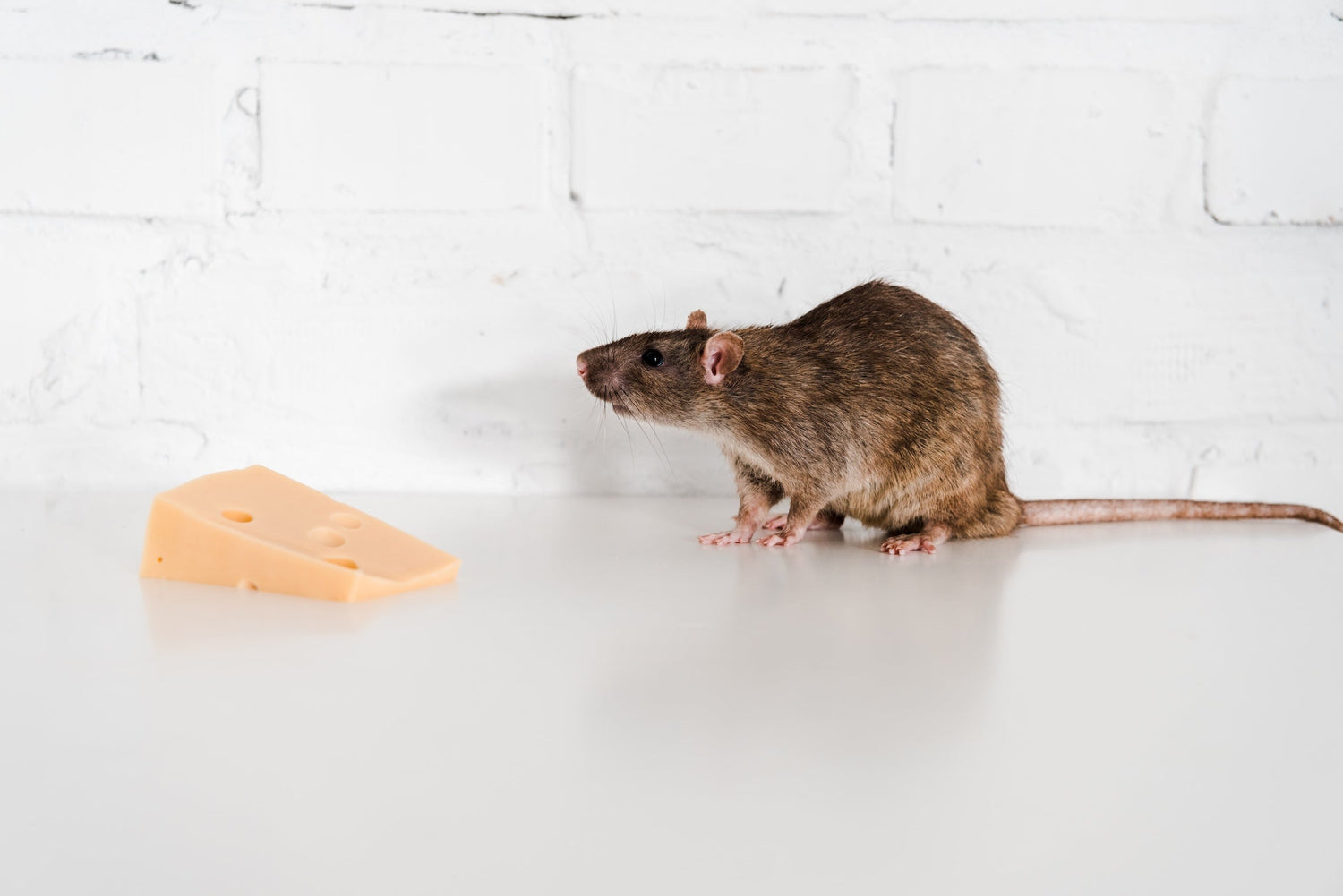
The kitchen is the place in the home that mice are drawn to most. Here they find everything they need – food, warmth and hiding places. If you see gnawed packaging in the pantry, small dark grains in a drawer or hear rustling behind the fridge at night, it's probably mice. A mouse infestation in the kitchen isn't just unpleasant, it's also a hygiene issue: mice can contaminate food and surfaces. The good news is that the kitchen is also where you can break the infestation fastest.
Quick answer: Mice in the kitchen are revealed by dark droppings (3–6 mm) in drawers and cupboards, gnawed food packaging and rustling behind appliances at night. They hide behind the fridge, cooker and under the sink. Remove all accessible food, set traps along the walls and seal the gaps around pipes and plinths to mouse-proof the kitchen.
How do you know you have mice in the kitchen?
Mice are nocturnal, so you rarely see them – but they leave clear traces. The most common are dark, spindle-shaped droppings (3–6 mm) in cutlery drawers, cupboards and along skirting boards. Other signs are gnawed holes in cardboard and plastic packaging, grease marks along walls where the mice move, and rustling or scratching sounds behind appliances at night. Go through all the signs of mice to be sure it isn't another animal.
Where do the mice hide in the kitchen?
Mice seek dark, warm and sheltered spots close to food. The most common hiding places in the kitchen are the space behind and under the fridge/freezer (where the compressor gives off heat), behind and under the cooker, in the bottom corners of cupboards, under the sink around pipe penetrations and in the gap behind the plinth. From here they make short trips to eat and return the same way – often along the walls, since mice are reluctant to cross open spaces. If the mice live in the wall behind the kitchen, you may need to deal with mice in the walls.
Risks – contamination and damage
Mice in the kitchen are above all a hygiene problem. They can spread pathogens such as salmonella via droppings, urine and saliva, and contaminate both food and the surfaces you cook on. Food that mice have been on should be thrown away. Beyond the health risk, mice gnaw on packaging, appliance cords and wooden fittings – gnawed electrical cables behind a dishwasher are also an easily overlooked fire risk.
How to get rid of mice in the kitchen – step by step
Do this, in this order:
- 1. Remove all accessible food. Store dry goods in sealed containers of glass or hard plastic, wipe down surfaces every evening and empty the pet's food bowl at night. Without food, mice lose their reason to stay.
- 2. Set traps. Place snap traps along walls and in the bottom corners of cupboards, with the bait end towards the wall. Chocolate or peanut butter works better than cheese. See the full guide on how to get rid of mice.
- 3. Clean contaminated surfaces. Wear gloves, wipe up droppings carefully (don't vacuum them dry) and clean with detergent.
- 4. Seal the entry points. Block gaps around pipes under the sink and at plinths with steel wool and sealant – do this after you've caught the mice that are inside.
As a poison-free, preventive complement in adjacent spaces like the pantry, storage room or basement, an electronic mouse repeller can make the environment unwelcoming to mice using ultrasound and bioacoustic signals – without poison or traps in the kitchen.
How to mouse-proof the kitchen long term
Once the mice are gone, it's about making the kitchen uninteresting. Store all dry food in sealed containers, keep it clean under and behind appliances, take out the rubbish regularly and never leave dishes or food scraps out overnight. Seal new gaps as soon as they appear. A clean, sealed kitchen without easily accessible food is simply not worth the effort for a mouse.
\nFrequently asked questions
Do I have to throw away food that mice have been on?
Yes. Mice can spread pathogens via droppings, urine and saliva. Throw away opened packaging and food that shows signs of gnawing or droppings, and clean the surfaces they've moved across.
Why are mice drawn to the kitchen in particular?
The kitchen gathers everything mice seek: food in the form of crumbs and open packaging, warmth from appliances and hiding places behind and under cupboards and machines. That makes the kitchen the most common mouse spot in the house.
How do I know where the mice get into the kitchen?
Look for gaps behind and under appliances, around pipe penetrations under the sink and at skirting boards. Mice follow walls, so droppings and grease marks along the plinths often show their route.