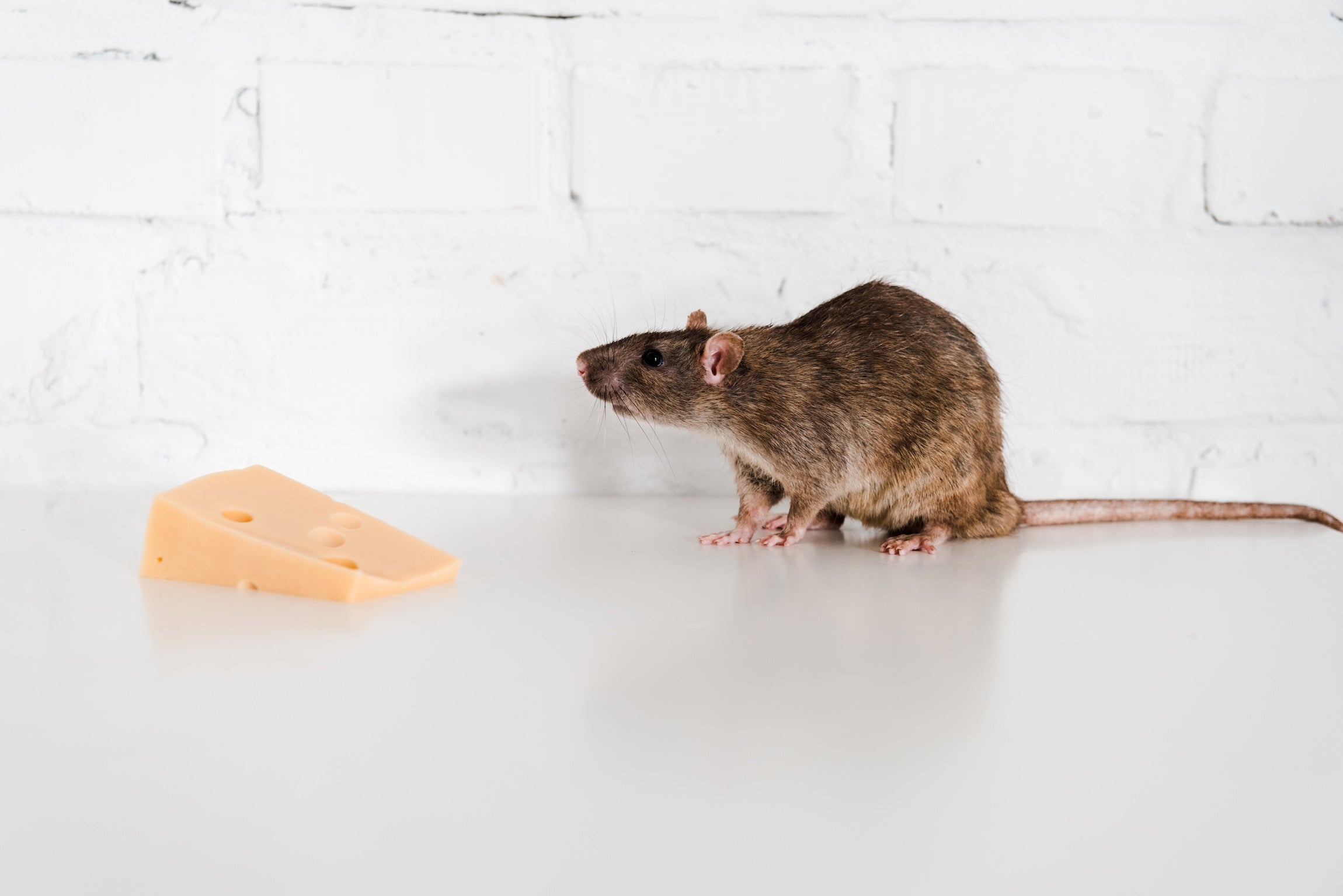

Scratching in the walls at night, gnaw marks in the pantry or small dark grains behind the cooker? Then you probably have mice in the house. Mice are one of the most common pests in homes – and because they breed fast, it pays to act early. This guide gives you the whole picture: how to recognise mice, why they come in, the risks they pose and how to get rid of them and keep them away.
Quick answer: Mice in the house are revealed by dark droppings (3–6 mm), gnaw marks, scratching at night and a sharp smell of urine. They get in through gaps as small as 6 mm in search of warmth, food and shelter. Seal the entry points, remove access to food and set traps along the walls to break the infestation.
How do you know you have mice in the house?
Mice are nocturnal and shy, so you rarely see them directly – but they leave clear traces. The most common signs are dark, spindle-shaped droppings (3–6 mm) along walls and in cupboards, gnaw marks on packaging and wood, scratching and running sounds in walls and ceilings at night, and a distinctive ammonia smell of urine. If you find fresh droppings in several places, the infestation is already established. Go through all the signs of mice in detail to be sure.
Why do mice come into the house?
Mice seek three things: warmth, food and shelter. Your house often offers all three, especially in autumn when the temperature drops and food outdoors dwindles. Open food packaging, crumbs, pet food and moisture attract mice, while cluttered spaces, insulation and cavities in walls provide shelter.
A mouse gets in through an opening of just 6 millimetres – about the thickness of a pencil. Common entry points are gaps at pipe penetrations, cracks in the base wall, vents without mesh and loose door and window frames. If you're unsure whether it's mice or rats, read about the difference between rats and mice, since the measures differ somewhat.
Are mice dangerous? Risks to know about
Mice are not just a nuisance – they pose real risks. They spread pathogens through droppings and urine and can aggravate allergies and asthma, especially in children. They also gnaw constantly to file down their teeth, which takes its toll on electrical cables (with fire risk as a result), insulation and packaging. Read more about mice and disease to understand the health risks.
How to get rid of mice – step by step
The most effective approach is to combine several measures and act quickly:
- 1. Confirm and map. Find out where the mice move and where they get in.
- 2. Set traps. Snap traps along walls and behind appliances are the most proven method. Use chocolate or peanut butter as bait, and more traps than you think you need. See the full guide on how to get rid of mice.
- 3. Hear sounds in the walls? Mice like to live inside walls and floor structures – read how to deal with mice in the walls.
- 4. Remove access to food. Store dry goods in sealed containers, wipe down surfaces and empty the pet's food bowl at night.
- 5. Seal the entry points. Use steel wool (mice can't gnaw through it) combined with sealant. Do this after you've caught the mice that are inside.
As a poison-free, preventive complement, an electronic mouse repeller can make the environment unwelcoming to mice using ultrasound and bioacoustic signals – without poison or traps. It works best in enclosed spaces like storage rooms, garages and crawl spaces, not as an emergency fix for a large infestation.
How to prevent mice
Once the mice are gone, the key is to keep them out. Seal gaps and pipe penetrations, keep it clean under appliances, store food in sealed containers and cut back bushes by the façade. Natural methods can complement – here you'll find scents that scare mice away. A dry, tidy and sealed home is simply far less attractive to rodents.
What to do now
Suspect mice? Start by confirming the infestation through the traces, then set traps along the walls and seal the entry points. If you act early, the problem is quickly solved. Dive into each step via the linked guides above, and add preventive protection to keep the house mouse-free season after season.
Frequently asked questions
How many mice are there if I see one?
If you see one mouse, there are almost always more. Mice breed fast – a female can have up to ten litters a year – so a couple of mice can become a colony in a few months. Assume there is more than one.
Are mice dangerous to people?
Mice rarely bite but can spread disease through droppings and urine, aggravate allergies and asthma, and gnaw on electrical cables, which increases the fire risk. So they are a health and safety problem, not just a nuisance.
What's the difference between mice and rats?
Mice are smaller (7–10 cm body) with droppings of 3–6 mm and make light, fast sounds. Rats are larger with droppings of 12–18 mm and heavier, more audible noise. The measures differ somewhat.