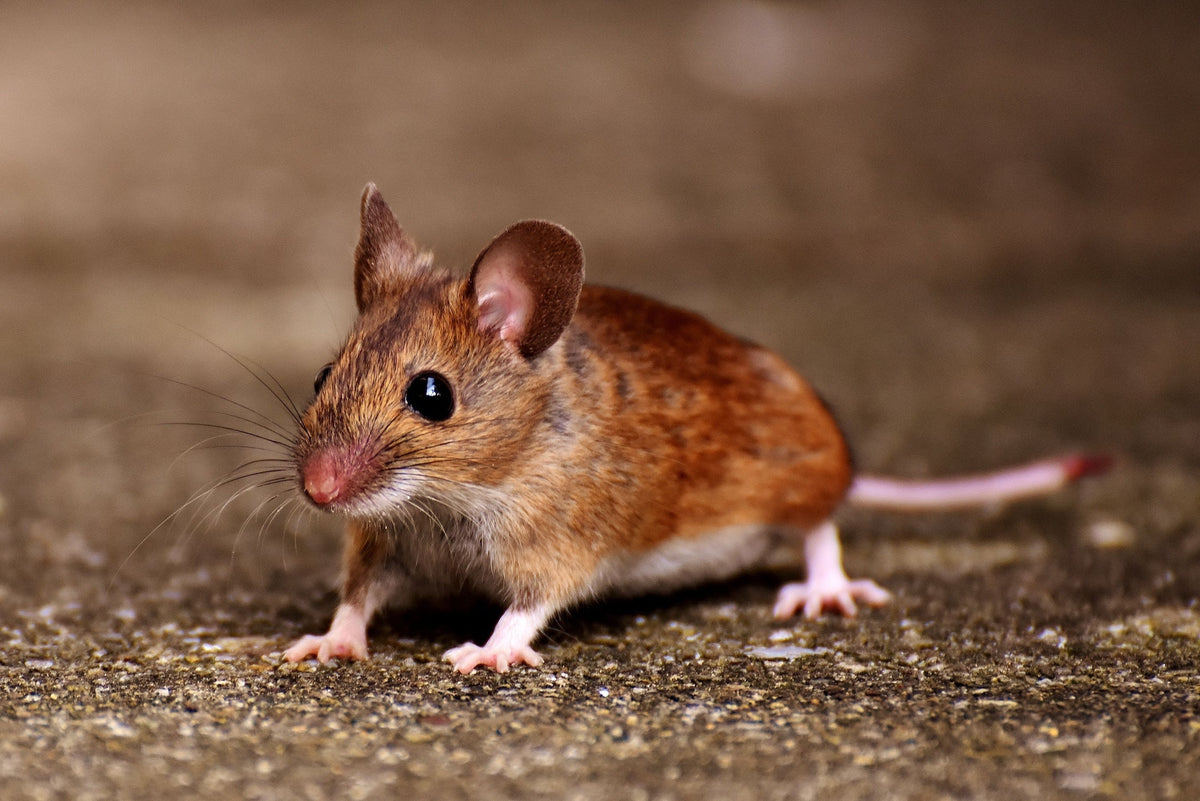

To keep mice away, it helps to understand how they actually behave. Mice are small but surprisingly capable – they climb, jump, gnaw through materials and are also curious, which affects how you best protect your home. Here we go through mice's habits, abilities and movement patterns.
Quick answer: Mice are nocturnal, curious and highly mobile. They climb rough walls, jump up to 25 cm and squeeze through gaps of just 6 mm. They follow walls and fixed runways, have poor eyesight but excellent smell and hearing. Unlike rats, mice are curious about new objects – which is why traps often work faster on mice.
Can mice climb?
Yes, mice are skilled climbers. They climb up rough surfaces like plaster, brick, concrete and wood, and can run along cables, pipes and behind panels. That means mice can get into the house well above ground level – via the façade, the eaves or the attic – not just at the foundation. Their light bodies mean that even thin wires and uneven surfaces are enough as a climbing route.
Can mice jump and squeeze through small holes?
Yes, and this is where mice really surprise. A mouse can jump about 25 centimetres straight up from the floor and drop from a considerable height without being hurt. More importantly: a mouse squeezes through an opening of just 6 millimetres – about the thickness of a pencil. The skull is the limiting factor; if the mouse gets its head through, the rest of the body follows. That's why even small gaps around pipes, vents and plinths are enough as an entry point.
Runways and movement patterns
Mice have poor eyesight and navigate using smell, touch (their whiskers) and memory. They therefore move along walls and obstacles and avoid open spaces. Over time, visible runways form along skirting boards and behind furniture, sometimes faintly smeared with grease from their fur. These trails show where the mice move – and are the best places to set traps. A mouse has a small territory, often just 3–8 metres, and makes many short trips from the nest.
Curious – the opposite of rats
An important difference from rats is that mice are curious, not suspicious, of new objects. While rats may avoid a freshly placed trap for several days (so-called neophobia), mice happily investigate new things in their surroundings right away. That's why traps often produce results faster on mice – they dare to approach. Mice are also nocturnal and most active just after it has gone dark and quiet. If you're unsure whether it's mice or rats you can hear, read about the difference between rats and mice.
What the behaviour means for protecting your home
Since mice climb, jump and squeeze through 6 mm, sealing at floor level alone isn't enough – also check vents, pipe penetrations and eaves higher up, and use steel wool that mice can't gnaw through. Place traps close together, along the walls where the runways run, and take advantage of the fact that mice dare to approach new objects. A poison-free, preventive complement in enclosed spaces is an electronic mouse repeller that makes the environment unwelcoming with ultrasound and bioacoustic signals.
What to do now
Use your knowledge of mouse behaviour as a map: look for traces along the walls, check both low and high entry points and set traps where the mice move. Go through all the signs of mice to confirm the infestation, and read the overall guide to mice in the house to break it and prevent them from coming back.
\nFrequently asked questions
Can mice climb walls?
Yes. Mice are skilled climbers and scale rough surfaces like plaster, brick and wood. They can also run along cables and pipes, which means they can get in high up in the house – not just at floor level.
Can mice jump?
Yes. A mouse can jump up to about 25 centimetres straight up and squeeze through a gap of just 6 mm. The combination of climbing, jumping and squeezing through small holes makes them hard to keep out.
What time of day are mice active?
Mice are most active from dusk to dawn, peaking just after it goes dark and quiet in the house. If you see a mouse during the day, it may indicate a larger infestation.