
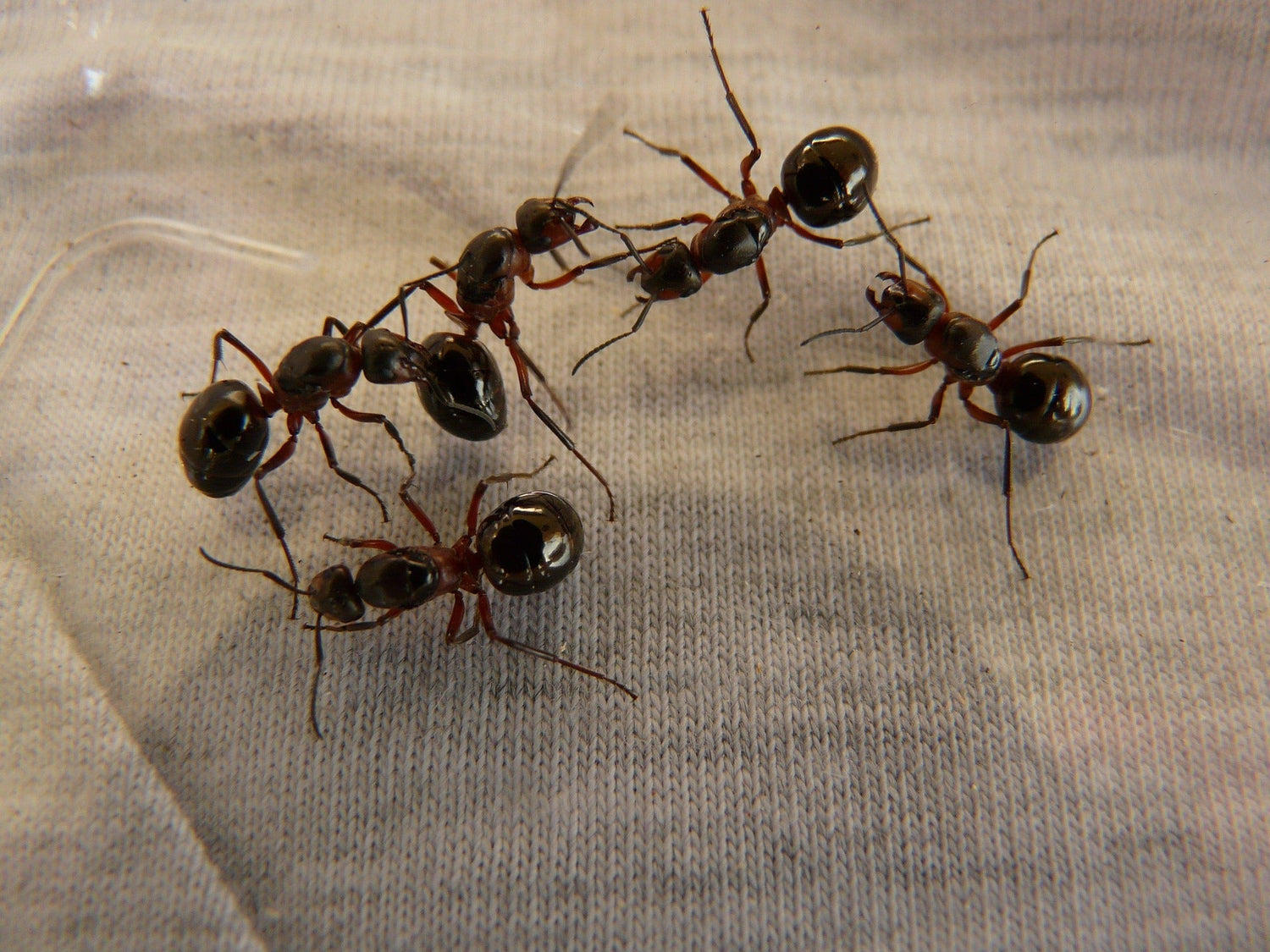
Ants in the home and garden — a complete guide to causes and solutions
Finding a trail of ants along the kitchen counter, in the garden beds, or under the floor is one of the most common pest problems in Swedish homes. Ants in the home are rarely dangerous, but an established ant colony can be difficult to get rid of — and in some cases cause damage, especially if it involves carpenter ants.
This guide gives you a complete picture of why ants seek their way inside, how to recognize the problem early, and which methods actually work — both indoors and in the garden.
Why do you get ants in your home?
Ants seek three things: food, water, and sheltered places to build a nest. Your home, your terrace, and your garden can offer all of this.
Indoors it is primarily sweets, crumbs, and moisture that attract them. Forgotten fruit on the counter, a honey jar with a loose lid, or a water leak under the kitchen sink — all of this sends chemical signals (pheromones) that ants can follow over long distances. A single scout ant that finds food then communicates the route to the entire colony.
Outdoors it is a matter of the garden offering sheltered spots for ant hills, access to aphids (an important sugar source for ants), and moist wood or rotting leaves to live under.
More about the underlying causes: Why you get ants indoors — what attracts them and how they find their way in.
Here's the translation:
Common ant species in Sweden
Most people encounter a few common species:
Black garden ant (Lasius niger) is by far the most common species in Sweden. It lives in the ground outdoors but readily makes its way inside during warm summer days in search of food. Black to dark brown, approximately 3–5 mm long.
Red ant (Myrmica species) is slightly reddish-brown and can make its way into kitchens and storage rooms, especially if there is a damp environment nearby.
Carpenter ant (Camponotus species) is considerably larger — up to 1.5 cm. It does not gnaw wood to eat, but builds its nest in moist, soft wood and can cause structural damage if it establishes itself in the house foundation or floor joists.
If you find piles of sawdust near doors or window frames it may be carpenter ants — a more serious scenario that requires prompt action.
Signs that you have ants
The most common sign is that you see ants. But the colony size and extent can be considerably larger than what is visible to the naked eye. Look for:
- Ant trails along walls, baseboards, and floors — ants follow pheromone trails and move in lines
- Piles of sawdust near wood — can indicate carpenter ants building a nest in the structure
- Ant eggs or larvae in cracks, under floors, or in insulation
- Ants in food packaging, the sugar bowl, or near pets' food bowls
Ants in the kitchen — the most common indoor problem
The kitchen is the place ants seek out the most. Sweet drinks, crumbs, fruit, and pet food are all they are looking for. Kitchen cabinets, the space behind the stove, and the damp environment under the kitchen sink are popular spots to settle in.
The most important thing you can do in the kitchen is to remove access to food and seal entry points — but how to do this correctly requires a bit more detail.
Flying ants — a season-specific phenomenon
In late summer, typically in July–August, ants swarm in large numbers. This is not a sign of a new infestation — it is the colony's reproduction. Queens and males fly out to mate and start new colonies.
Flying ants outdoors are temporary and rarely cause direct problems. But if you see them indoors during autumn or winter it may indicate that there is an established nest inside the building.
Ants in the garden — not always a problem
Ants in the garden are a natural part of the ecosystem. They aerate the soil, serve as prey animals, and help break down organic material. But they can also actively protect aphids that damage your plants.
The relationship between ants and aphids is well documented: ants "farm" aphids to gain access to their sweet honeydew and actively drive away the aphids' natural enemies. If you have problems with aphids on roses, beans, or fruit trees, the presence of ants can significantly worsen the situation.
How to get rid of ants
There is no single solution that works in all situations. The right method depends on whether the problem is indoors or outdoors, which species is involved, and how established the infestation is.
Indoors
The most effective methods are baits — sugar solutions or gels with insecticide — that ants carry back to the nest and kill the colony from the inside. This is best combined with removing the food they are seeking and sealing cracks and entry points.
Outdoors and in the lawn
Outdoors you can treat ant hills directly or use diatomaceous earth and natural repellents around the building to create a barrier. The most important thing is to identify where the colony has its nest.
Natural repellents
Cinnamon, vinegar, citrus, and diatomaceous earth can disrupt pheromone trails and deter ants — but they rarely eliminate an established ant colony for good. They work best as a supplement in a preventative effort.
Ants in the house foundation
Ants in the house foundation or under the floor require extra attention. Moist wood and poor ventilation in the crawl space create ideal conditions for colony formation. In the long run this can lead to structural damage, especially if it involves carpenter ants.
Prevent ants — the smartest thing you can do
It is considerably easier to prevent ants than to get rid of an established ant colony. The most important measures involve removing what attracts them: food, moisture, and entry points.
Seal cracks and gaps around pipes, window frames, and baseboards. Store food in sealed containers. Keep the area under appliances clean and make sure the compost heap is not placed directly against the house foundation. In the garden: avoid stacking rotting wood against the foundation and keep the area along the house walls tidy.
Summary
Ants seek out homes and gardens for simple reasons — food, water, and shelter. Most ant problems can be solved with the right combination of measures and a little patience. Carpenter ants and ants in the house foundation are the exceptions — there you should act quickly and potentially seek help from a pest control professional.
Choose one of the articles above for more in-depth information about your specific scenario, or start by identifying which species you have and where they are entering.