
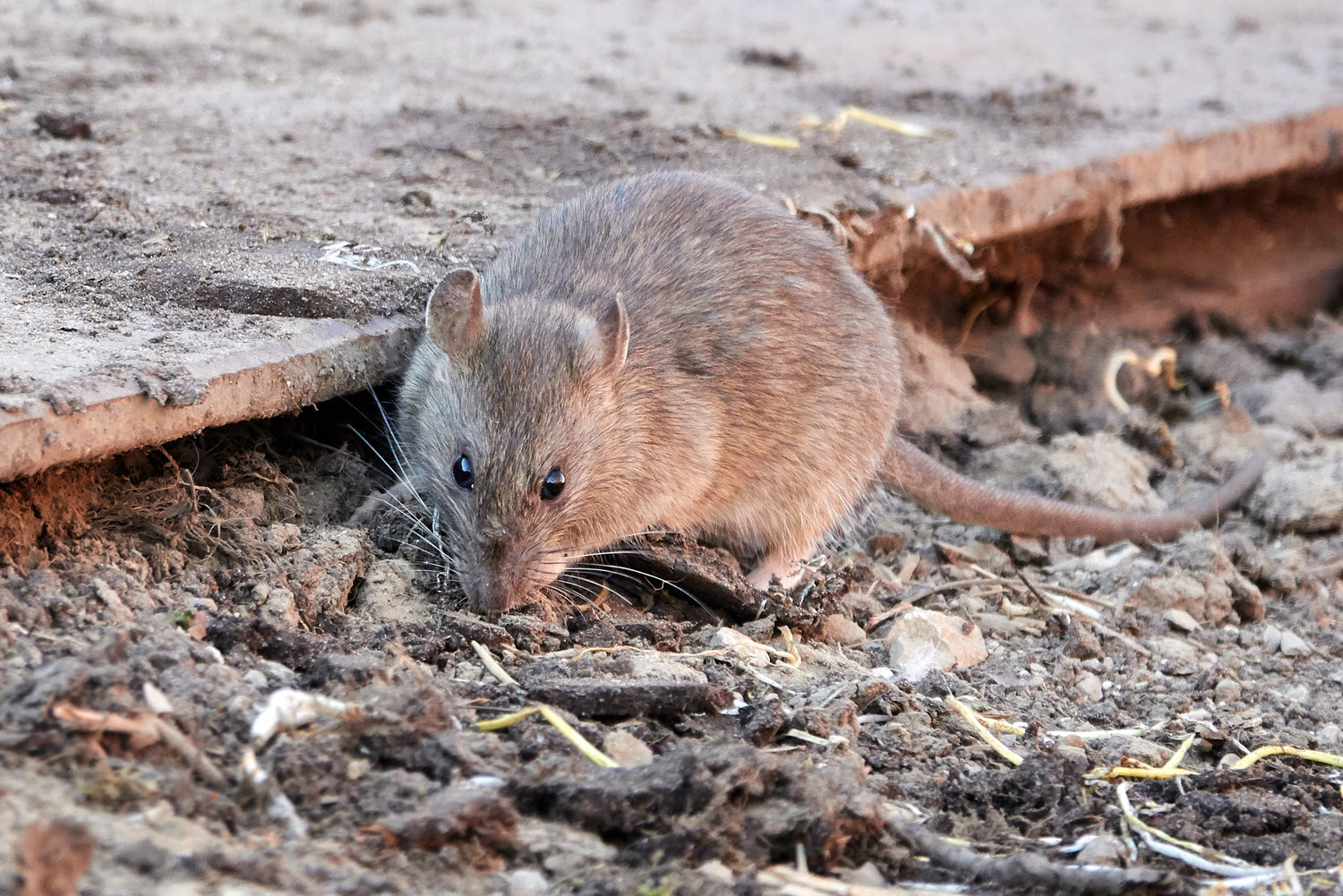
Finding small dark grains along a wall, in a cupboard or behind the fridge is often the first sign of rodents in the home. Rat droppings aren't just unpleasant – they can carry pathogens and need to be handled properly. They also reveal how large the infestation is and where the rats move. Here we go through how to recognise rat droppings, tell them apart from mouse droppings and clean them up safely.
Quick answer: Rat droppings are dark, spindle-shaped and 1–2 cm long, roughly like an olive pit, and often gather along walls and in cupboards. They can carry infection, so never handle them dry: dampen with disinfectant, wear gloves and a face mask, wipe up and dispose, and never vacuum them dry.
What do rat droppings look like?
Rat droppings are dark brown to black, spindle-shaped and tapered at the ends – in size they resemble an olive pit, about 1–2 centimetres long. A single rat produces up to 40 droppings a day, so they gather quickly in the places rats move. The most common spots to find droppings are along walls, behind appliances, in cupboards and storage areas, under the sink and near food storage.
Fresh droppings are dark, soft and shiny. Old droppings are grey, dry and crumbly. If you find both fresh and old droppings in the same place, the rats are still active.
Rat droppings or mouse droppings?
The easiest way to tell them apart is size. Rat droppings are 1–2 cm long, while mouse droppings are much smaller – only 3–6 mm and narrower, roughly like a grain of rice. Larger, chunkier grains mean rats; small, fine grains suggest mice. Since the measures differ somewhat, it's worth reading about the difference between rats and mice before you take action.
Are rat droppings dangerous?
Yes, rat droppings can pose a health risk. They can carry pathogens spread through contact or through dust that stirs up when you clean. Rats are associated with, among other things, salmonella and leptospirosis (Weil's disease). Dry droppings that are vacuumed or swept can release particles into the air, which is why they should always be dampened first. To understand the health risks in more depth, read about why rats are more dangerous than you think.
How to clean up rat droppings safely – step by step
Follow this order to avoid infection risk:
- 1. Protect yourself. Put on disposable gloves and ideally a face mask. Ventilate the room before you start.
- 2. Dampen – never vacuum dry. Spray the droppings and the surrounding area with disinfectant or diluted bleach and let it sit for a few minutes. This binds the particles so nothing stirs up.
- 3. Wipe up and dispose. Wipe up with paper towels and put them in a sealed plastic bag. Then wipe the surface again with disinfectant.
- 4. Clean and wash. Discard the gloves, wash your hands thoroughly and launder any textiles that came into contact with the droppings.
What the droppings tell you about the infestation
The amount and spread say a lot. A few grains in one place may indicate a lone rat passing through, while droppings in several places – combined with gnaw marks and smell – show that a colony has already established itself. Fresh droppings mean ongoing activity. Use the findings as a map: where the droppings gather, the rats move, and that's where you should act.
What to do now
If you find rat droppings, clean them up safely following the steps above and map where they gather. Then go through all the signs of rats and read the overall guide to rats in the house to break the infestation and prevent them from coming back.
\nFrequently asked questions
Are rat droppings dangerous to breathe in?
Dry rat droppings can contain pathogens that stir up into the air if you sweep or vacuum dry. That's why you should always dampen the droppings with disinfectant first, wear gloves and a face mask, and never vacuum dry.
How do I tell rat droppings from mouse droppings?
Rat droppings are 1–2 cm long, dark and spindle-shaped – roughly like an olive pit. Mouse droppings are much smaller, only 3–6 mm, and narrower. Size is the surest way to tell them apart.
How do I know if the droppings are fresh?
Fresh droppings are dark, soft and shiny. Old droppings are grey, dry and crumbly. If you find both fresh and old droppings, the rats are still active.