
3 products
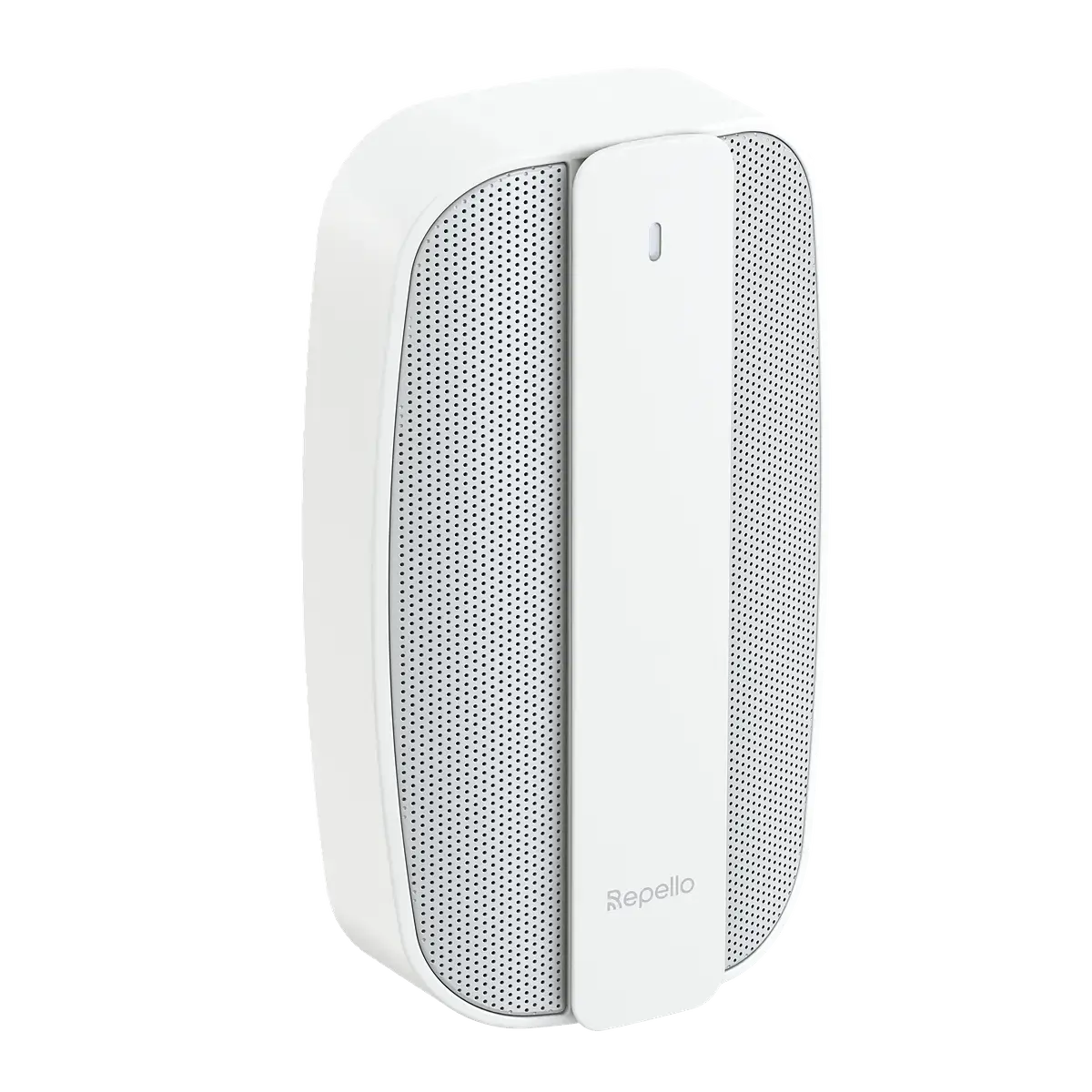
What is a mouse repeller and how does it work?
A mouse repeller is an electronic device that emits high-frequency sound waves to make the environment unpleasant for mice. The sound is in the ultrasonic range – above 20 kHz – and is inaudible to humans. Mice and rats, however, have very sensitive hearing in these frequencies and experience the sound as disturbing or threatening.
A mouse repeller is sometimes also called a mouse and rat repeller, ultrasonic repeller or rodent repeller. The basic idea is the same: to create a sound field that causes mice to leave the area voluntarily. You avoid having to deal with dead animals, poison or traps.
How to choose the right mouse repeller
The market is full of mouse repellers in different price ranges. Here is what actually determines whether a model delivers results.
Varied frequencies. Choose a mouse repeller that alternates between multiple frequencies and sound patterns. Constant tones stop working when mice get used to them. Repello automatically alternates between 28 and 85 kHz.
Sound intensity. A more powerful signal reaches further and covers more area. Repello uses a patented sound chamber that amplifies the signal up to 30 times compared to conventional ultrasonic devices, with a sound level of over 90 dB.
Coverage per unit. Check how many square metres a unit covers. Repello protects up to 40 m² per unit. Since ultrasound does not pass through walls, each room or separate space needs its own unit.
Power source. Most mouse repellers connect to a regular wall socket. Repello uses only 2.8 W, roughly the same as a mobile phone charger. If you are looking for a battery-powered mouse repeller for spaces without electricity, such models exist from other manufacturers, but always check that battery-powered models have sufficient sound intensity.
Scientific support. Most mouse repellers on the market lack independent test results. Repello is the only mouse repeller with documented effectiveness from SLU – and has been named the best-in-test mouse repeller in both 2025 and 2026.
Pets. An ultrasonic mouse repeller is safe for humans, dogs and cats. Repello is confirmed to be inaudible to these animals. However, you should avoid using a mouse repeller in the same room as domestic rodents – hamsters, guinea pigs and pet mice may be affected.
Where a mouse repeller is most useful
Mice can squeeze through openings as small as 6–7 mm and can show up virtually anywhere in the house. Here are the most common places where a mouse repeller helps:
Kitchen and pantries – food scraps and open packaging attract mice. Place the mouse repeller near the floor where mice move around.
Attics and roof spaces – mice in the attic are one of Sweden's most common rodent problems. The warmth from the house attracts them and the insulation material provides perfect nesting material.
Basements and crawl spaces – damp, dark spaces where mice like to settle.
Garages and storage rooms – often with small holes and stored materials that provide hiding places.
Cottages and vacation homes – houses that stand empty are extremely vulnerable. A mouse repeller running year-round provides protection even when you are not there.
Utility rooms and boiler rooms – water pipes and heat attract rodents. These spaces are often overlooked.
What makes a mouse repeller effective?
What distinguishes a good mouse repeller from a lesser one is how the signal is constructed. Mice are intelligent and adaptable – a signal that imitates their own alarm calls triggers a flight response at a deeper level than a generic ultrasound. When the signal pattern also varies continuously, mice never get the chance to read it as harmless. This is the principle behind Repello's scientifically tested technology.
Bioacoustics – how Repello speaks the language of mice
Behind Repello's mouse repeller lies several years of research at Luleå University of Technology (LTU). Researchers have studied how mice and rats warn each other in nature and mapped the exact sound patterns that trigger a flight response. The result is a patented bioacoustic signal – not a generic ultrasound, but a recreation of the mice's own alarm language.
When a Repello unit is activated, mice perceive the environment as life-threatening and move away immediately. The technology has been evaluated by the Swedish University of Agricultural Sciences (SLU) in an independent field study where wild rodents were monitored with infrared cameras over three weeks. The study showed 91 percent fewer rodent observations and up to 100 percent repelling effect. A particularly interesting finding: the effect persisted for up to 18 days even after the unit was turned off – a sign that the mice had learned to avoid the area.
Bioacoustic signals – the technology behind a mouse repeller that works
Researchers at Luleå University of Technology (LTU) have mapped how mice and rats communicate and warn each other of danger. The result is a new type of technology – bioacoustics – that imitates the species' own alarm signals instead of simply emitting a generic ultrasound.
When a mouse repeller with bioacoustic technology is activated, mice perceive the signal as a real life-threatening danger. The flight instinct is triggered at a deeper level, and the rodents leave the area. Because the signal patterns vary continuously, the animals do not adapt – the effect lasts over time.
Repello's mouse repeller is based on this very patented technology from LTU. In an independent field study from the Swedish University of Agricultural Sciences (SLU) – where wild rodents in an established population were monitored with infrared cameras over three weeks – the unit showed 91 percent fewer rodent observations and up to 100 percent repelling effect. The effect also persisted for up to 18 days even after the unit was turned off.
Repello's mouse repeller – technology and specifications
Repello is a Swedish-developed mouse repeller based on patented bioacoustic technology from LTU. The product has been evaluated by SLU in an independent field study and is the only mouse repeller on the market with scientifically documented effectiveness.
- Technology: Bioacoustic signals that imitate the mice's own alarm calls – not just ordinary ultrasound
- Frequency range: 28–85 kHz (automatically alternating)
- Sound intensity: Over 90 dB thanks to a patented sound chamber – up to 30 times stronger than conventional models
- Coverage: Up to 40 m² per unit
- Energy consumption: 2.8 W – low operating cost even with year-round use
- IP rating: IP21
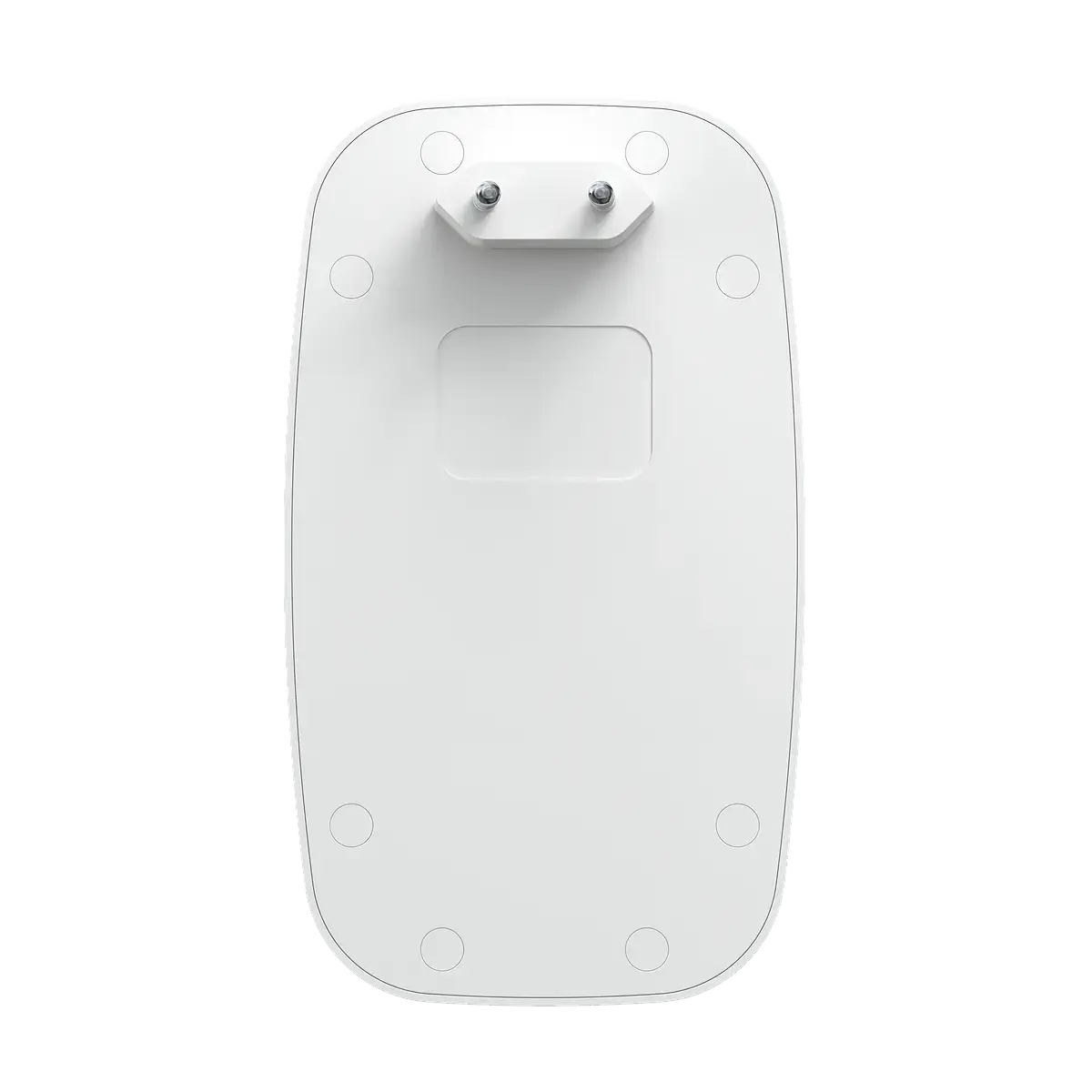
- Installation: Plug into a wall socket near the floor – ready to use straight out of the box
- Maintenance: Completely maintenance-free operation – no service required
- Safety: Silent and inaudible to humans, dogs and cats. Not recommended in the same room as domestic rodents
- Guarantee: 30-day satisfaction guarantee – try it risk-free
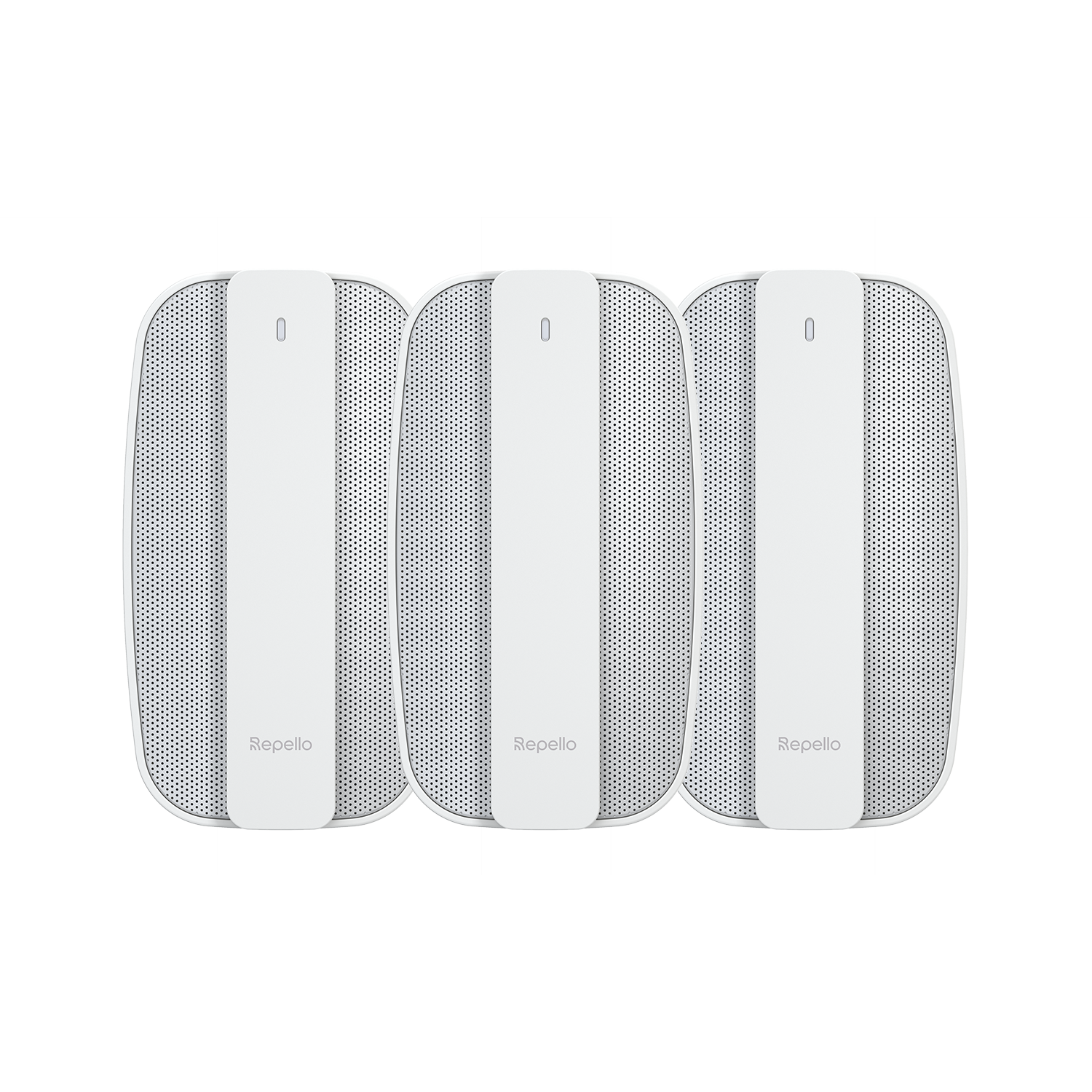
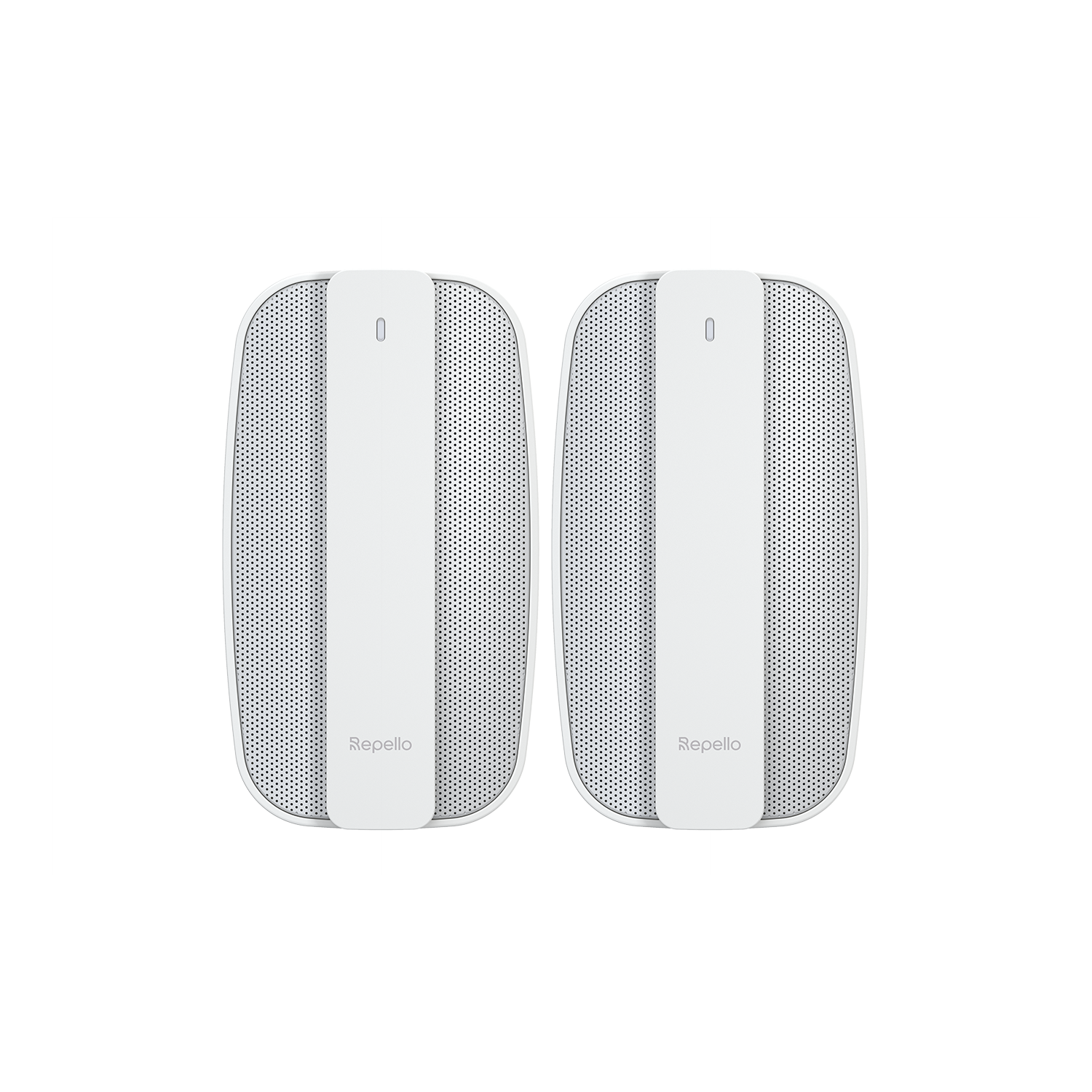
- Available as: 1-pack, 2-pack and 3-pack with bulk discount
Do you have a mouse problem at home? Here is how Repello helps you quickly
Most mouse infestations in Swedish homes begin in late autumn, when outdoor temperatures drop and mice seek warmth indoors. A single female mouse can give birth to 5–10 litters per year, meaning a small problem can quickly grow if nothing is done. The earlier you act, the easier it is to get rid of them.
Repello's mouse repeller is designed to work immediately – not just as a preventive measure. SLU's field study was conducted on an established, wild rodent population in an environment where the mice were already settled. When the unit was activated, the rodents began leaving the area almost immediately, and activity dropped dramatically throughout the entire test period. Unlike a mousetrap, which must be emptied and re-baited for each individual mouse, Repello provides continuous protection across the entire space – quietly in the background, around the clock.
For best results, we recommend combining Repello with a few simple measures: seal openings around pipe penetrations and vents (mice can get through holes as small as 6–7 mm), store dry goods in sealed containers and keep the area free of crumbs.
Frequently Asked Questions About the Repello Mouse Repeller
Does the Repello mouse repeller really work?
It depends on the model. Simpler mouse repellers with a monotone ultrasonic tone have shown limited effectiveness. Repello is the only mouse repeller with documented effectiveness from SLU – 91 percent fewer rodent observations and up to 100 percent repelling effect in field tests on an established rodent population.
Which mouse repeller is best in test?
Repello has been named the best-in-test mouse repeller in both 2025 and 2026 in several independent comparisons. The reason is that Repello is the only model based on scientifically verified bioacoustic technology and has documented effectiveness from SLU.
Can you hear the sound from a mouse repeller?
No. Repello uses frequencies from 28 kHz and above – completely outside the human hearing range. You will not notice that it is running.
How quickly will I get rid of the mice?
Rodents typically react immediately when Repello is activated. In SLU's tests, rodents were filmed stopping abruptly and fleeing. Most users see a clear improvement within 3–10 days, with full effect within two to four weeks. The study also showed that the effect persisted for up to 18 days after the unit was turned off.
Will my pets be affected by a mouse repeller?
Dogs and cats are not affected – this was confirmed in SLU's field test. Domestic rodents such as hamsters, guinea pigs and pet mice may however find the sound uncomfortable and should not be kept in the same room.
Do I need more than one mouse repeller?
In most cases yes, if you want to protect multiple rooms. Ultrasound does not pass through walls, so each space needs its own unit. Repello is therefore available in both 2-pack and 3-pack with bulk discount. For a typical house with a basement and attic, two to three units is a good starting point.
Does a mouse repeller work in the attic?
Yes, attics are among the most common places where mice settle. Since they are often open spaces with few obstacles, ultrasound works particularly well here. Place the mouse repeller near the power outlet with a clear line of sight into the space.
Are there battery-powered mouse repellers?
Yes, there are battery-powered mouse repellers from other manufacturers. These can be practical in spaces without electricity, but often have lower sound intensity. Repello requires a wall socket but compensates with significantly higher performance and maintenance-free operation.
Is a mouse repeller better than a mousetrap?
A mousetrap catches individual mice but must be emptied and re-baited regularly. A mouse repeller like Repello instead drives mice away from the entire area continuously – without killing them. The two can also be combined: the mouse repeller for long-term protection, traps for individual rodents that have already made their way in.
Can a mouse repeller also be used against rats?
Yes. Repello's mouse repeller works just as well against rats as against mice – it is the same unit and the same technology. The bioacoustics are based on signals that both species perceive as life-threatening danger. Many customers use it as a combined mouse and rat repeller.