

The science behind Repello
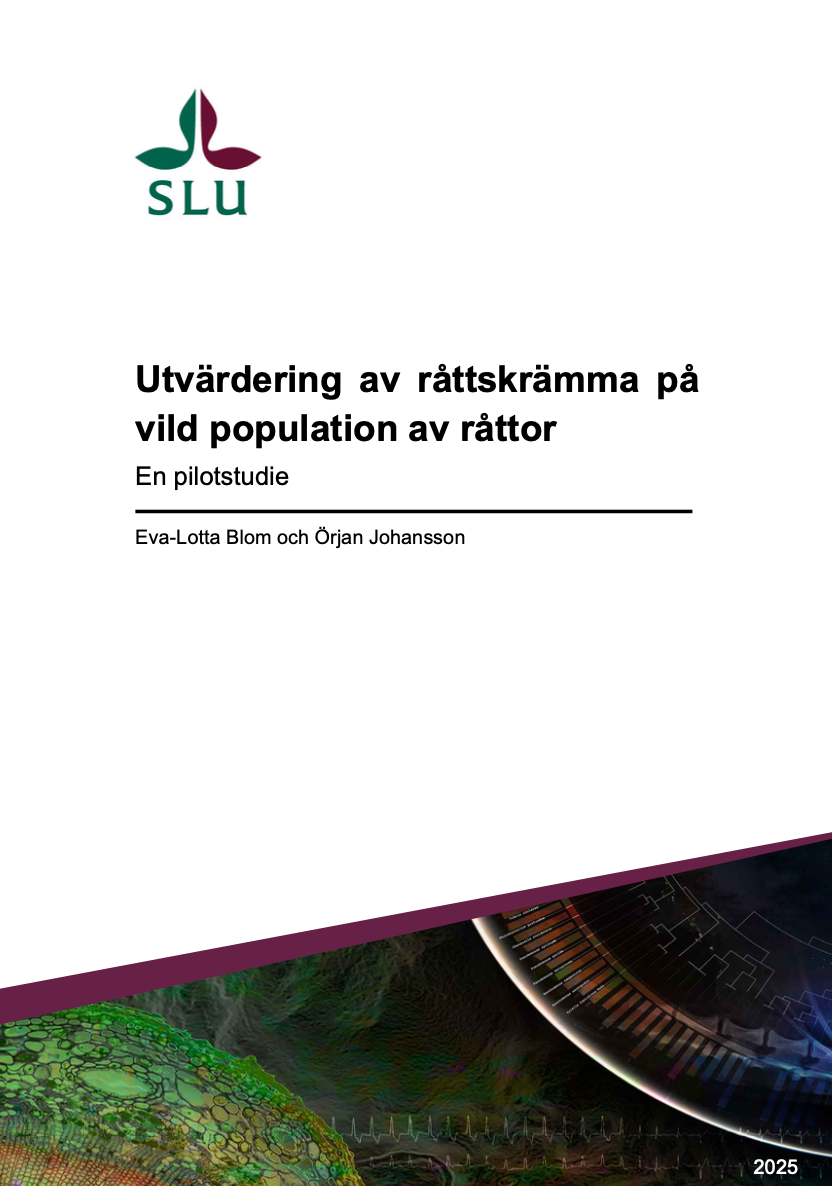
Repello is based on research that has identified the rat's own way of signalling danger, and creates an environment that the brain instinctively perceives as unsafe. The technology was developed by researchers at Luleå University of Technology and tested in a pilot study by the Swedish University of Agricultural Sciences (SLU).
The world's first scientifically tested mouse and rat repeller
Repello is the only rat and mouse repeller that is based on the species' own alarm signals. Developed by Professor Örjan Johansson at Luleå University of Technology (LTU) and evaluated in a pilot study by the Swedish University of Agricultural Sciences (SLU).


91%
Fewer rat observations
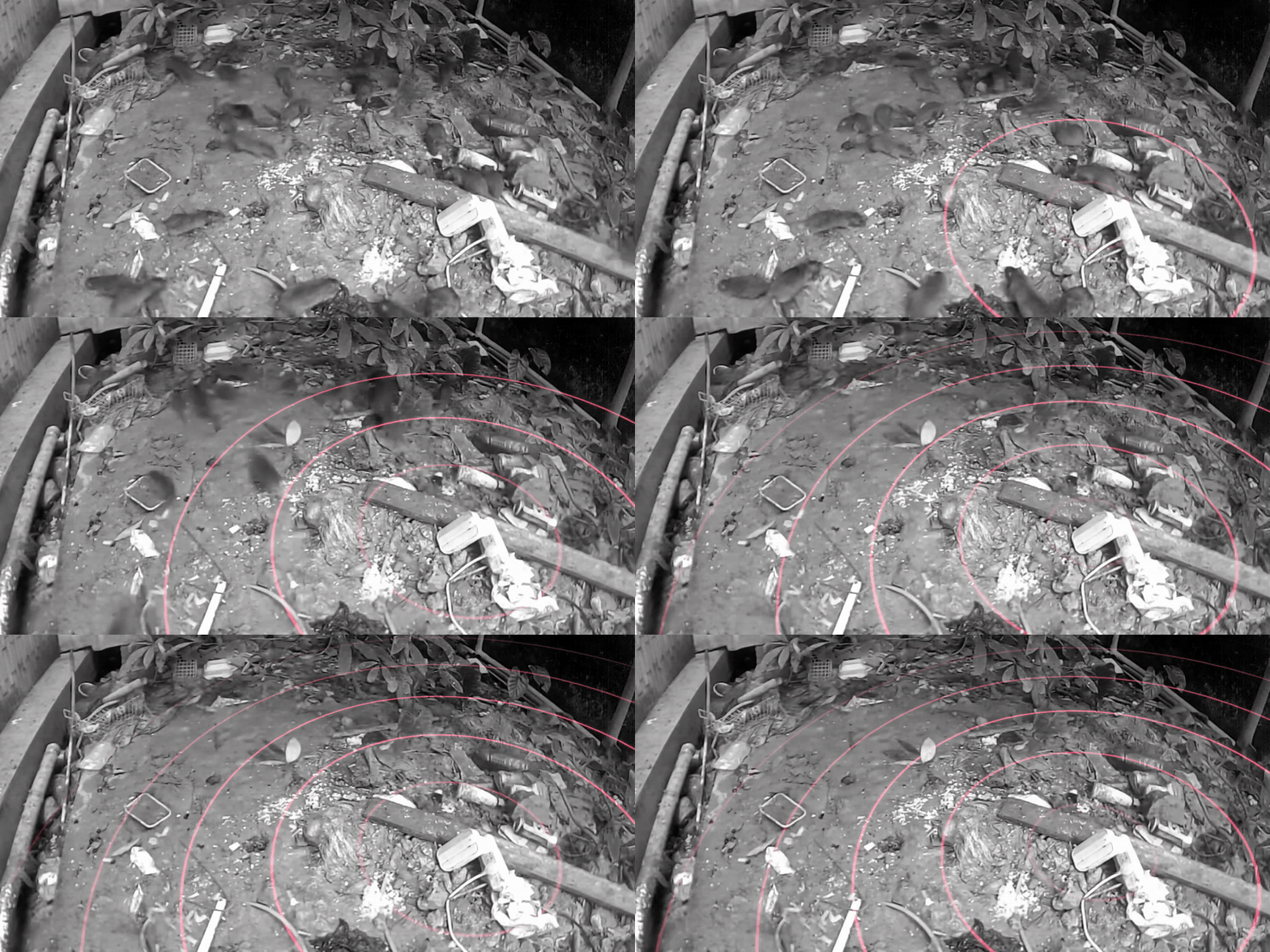
In the SLU pilot study, the number of registered rats decreased dramatically when Repello's signal was activated. Activity dropped by over 90% in some spaces, even in heavily affected environments.
100%
Repelling effect
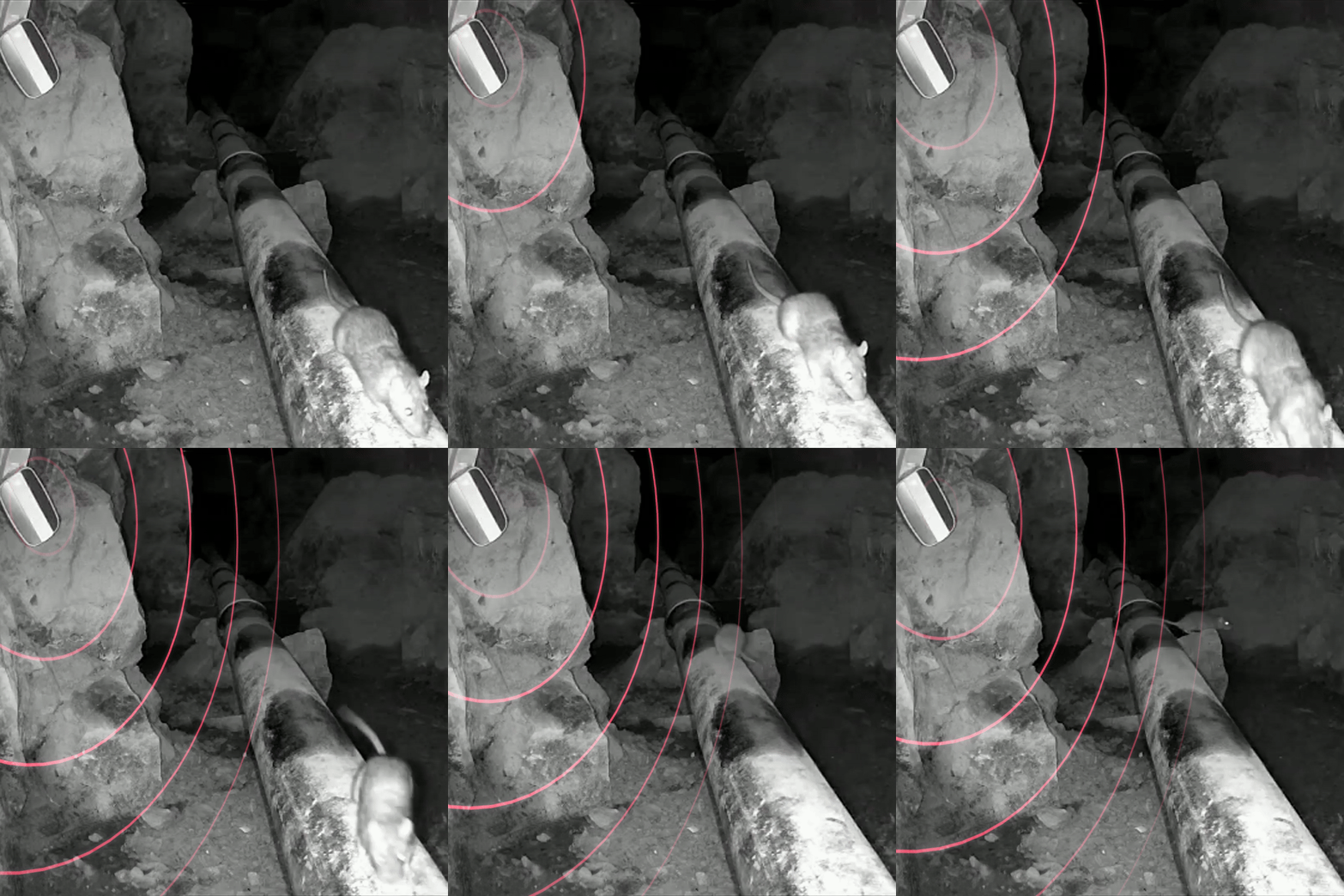
In every registered rat encounter the same reaction occurred: the rat stopped, turned around and left the area. Not a single individual ignored the signal – all fled immediately.
Key study findings
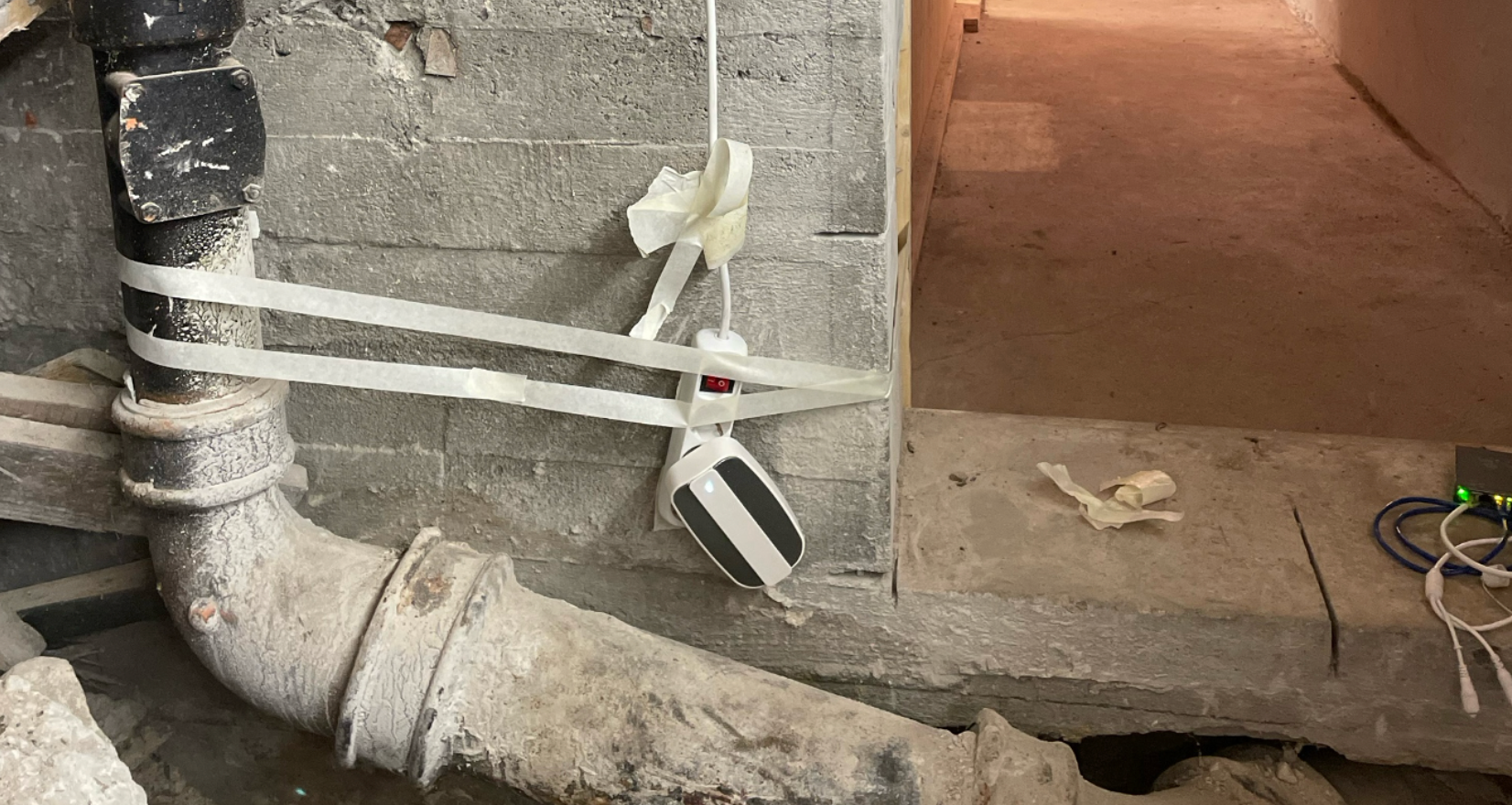
The Swedish University of Agricultural Sciences conducted a pilot study in which an ultrasonic signal, developed at Luleå University of Technology, was tested in a residential building with documented rat problems. Using infrared cameras, researchers monitored rat behaviour in real time. The results were clear: the signal affected rat behaviour immediately and significantly reduced activity, particularly in narrow passageways.
The study was conducted in a residential building with documented rat problems, in three different spaces where rats moved naturally.
First, rat activity was measured without any intervention. The ultrasonic signal was then activated during an intervention week in order to compare the effects.
The signal's frequency sweep (25–85 kHz) and pulsating nature mimicked the rat's own teeth grinding "alarm sound" – not random ultrasound.
When the sound was activated, rat activity decreased significantly. In the corridor, observations dropped by over 90% compared to the control week.
The few individuals that despite the sound made their way into the space turned around immediately and left the area, demonstrating a 100% repelling effect on rats that were directly exposed.
The results showed a significant reduction in rat observations
Behaviourally designed signal
Transmits the rat's own warning sound in ultrasonic form – the basis of the effect demonstrated in the SLU test.
Where the effect was measured
Rat observations decreased by over 90%. The rats that did appear turned back immediately.
Verified ultrasonic profile
Pulsating sweeps of 25–85 kHz, peaks above 100 dB – exactly the signal that rats responded to.
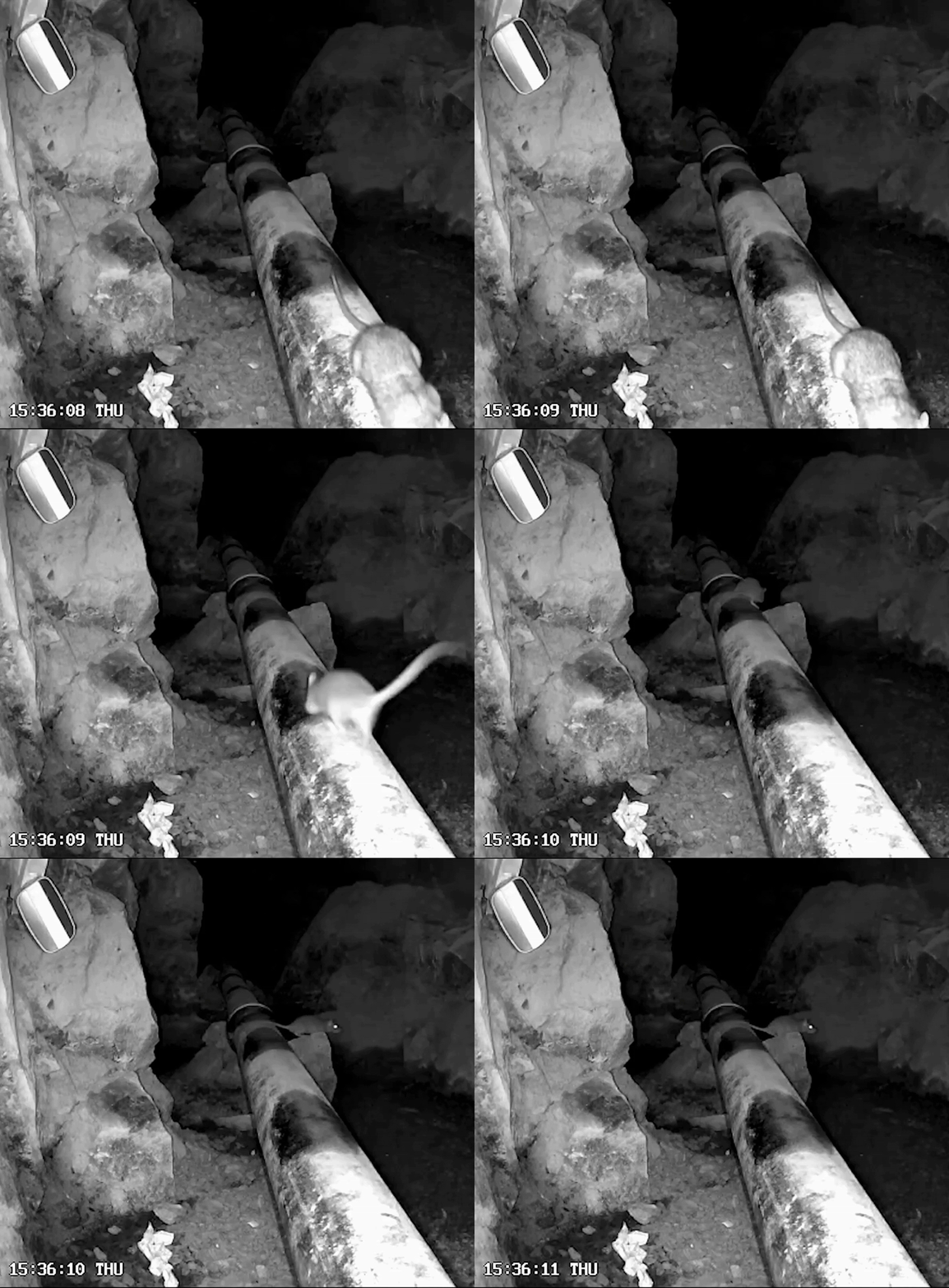
The reaction occurs within seconds
In the SLU test, rats stopped immediately when the signal was activated and left the area straight away. This shows that the signal triggers an instinctive threat response – not just irritation.
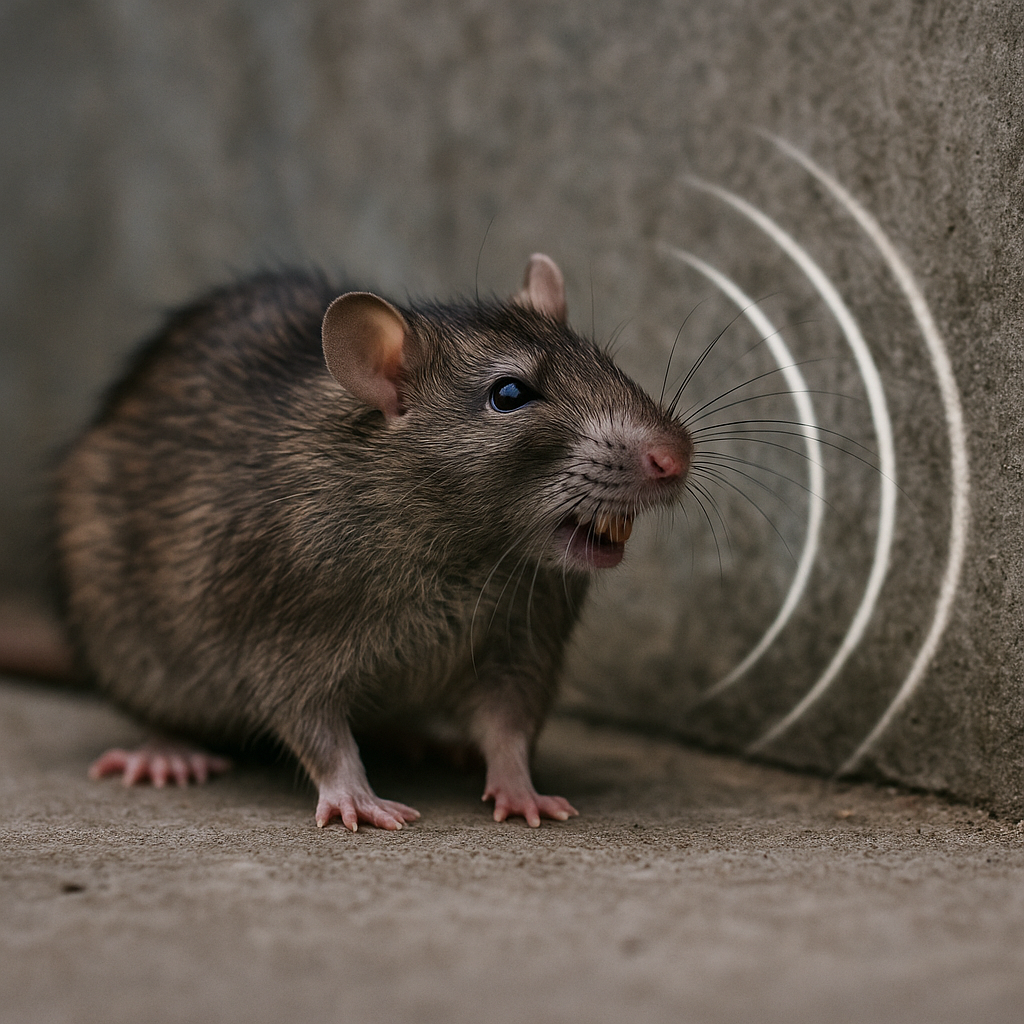
Designed after the rat's alarm signal
The patented signal's pulsating sweep (25–85 kHz) mimics the teeth grinding warning of rats. It is the same type of sound that rats use to warn others in the group – which is why it works.
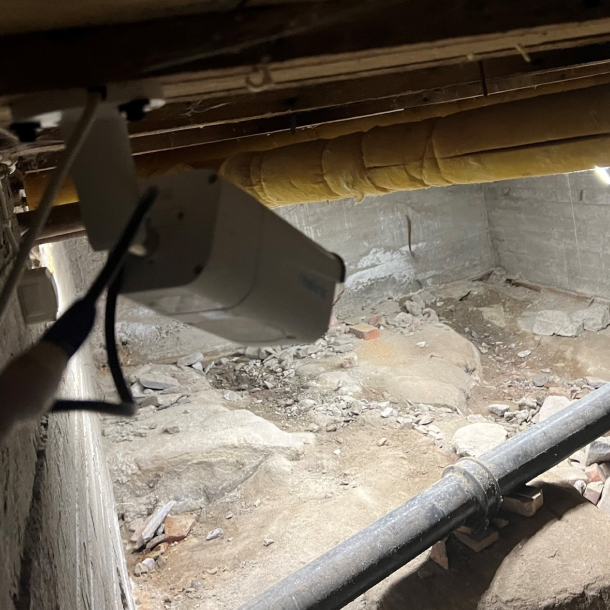
Verified in a real-world environment
The test was conducted in a residential building with active rat problems. The result: significantly reduced activity, particularly in narrow passageways where the effect reached over 90%.
Frequently asked questions and answers
Everything you need to know about the method, the pilot study and how the researchers actually tested the technology.
What was the purpose of the SLU study?
To evaluate a new ultrasonic method based on the rat's own alarm sound and to determine whether it actually reduces rat activity in a real environment with documented rat problems.
How was the test conducted?
The study had a control week without sound and an intervention week with the signal. Infrared cameras monitored three spaces around the clock, providing objective data on rat behaviour before and after.
Why is the study called a pilot study?
Because the method was being tested for the first time in a field environment. This does not mean the study was small – on the contrary, it had a comprehensive design with baseline measurements, multiple spaces and advanced data collection.
Has Repello been long-term tested?
Yes, the test ran for a total of 3 weeks. Similar studies have previously only measured an initial reaction, that is how a specific rat reacts to the sound when exposed to it in a laboratory environment.
What was observed when the signal was activated?
The rats showed a clear and instinctive threat response:
- stopped
- froze (freeze response)
- fled immediately
This is exactly the behaviour rats display in response to natural alarm signals.
How significant was the effect?
In the corridor, rat activity decreased by over 90%. The few rats that did enter turned back immediately, demonstrating a 100% repelling effect on exposed individuals.
What does this mean for Repello?
Repello is based on the same type of behaviourally designed ultrasound that was tested in the study – not on random frequencies. This means that Repello is grounded in research and documented rat response, not on traditional guesswork-based repellers.