
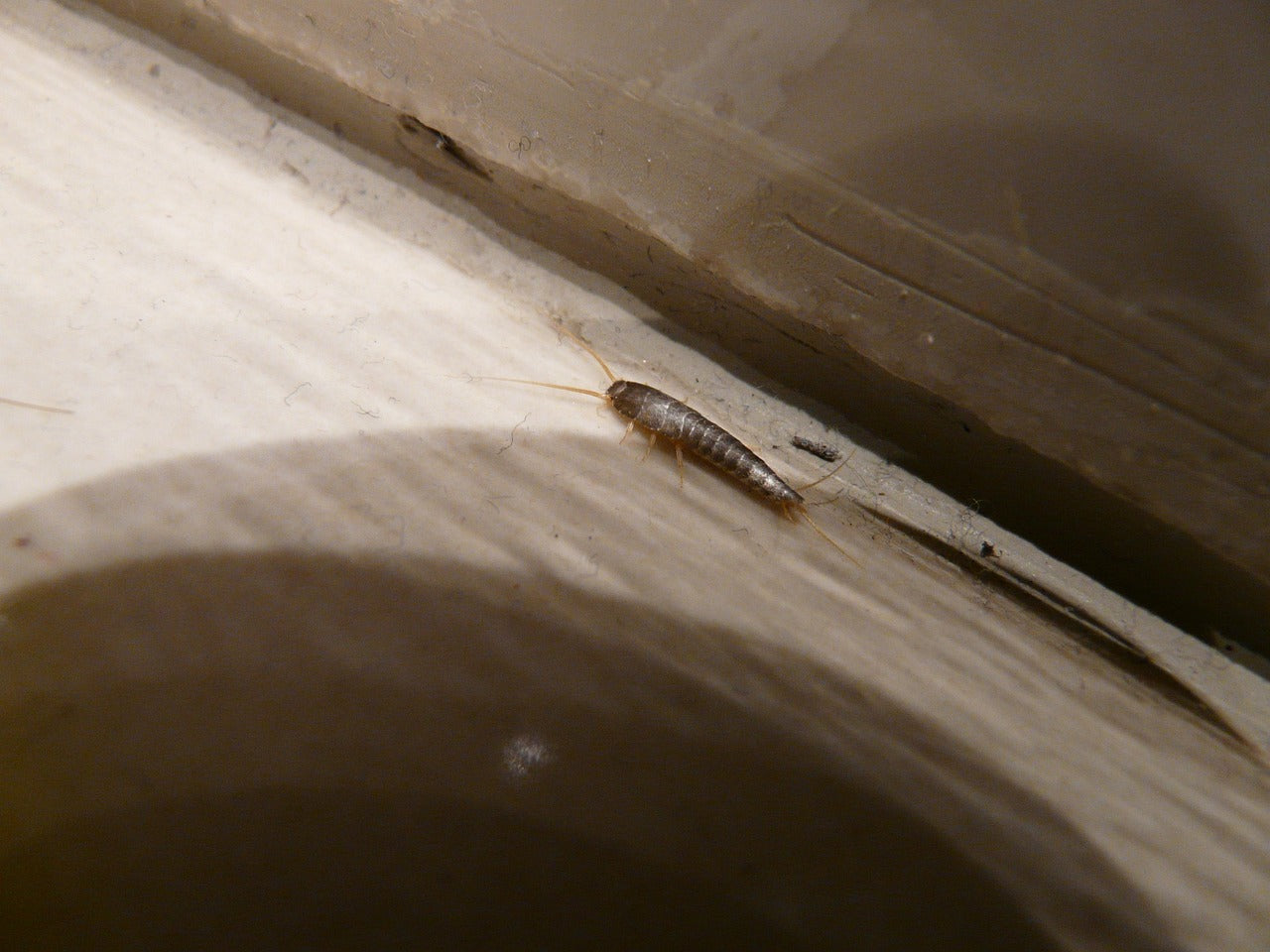
You turn on the bathroom light late in the evening and see something small and silvery moving lightning-fast along the baseboard. A silverfish. There are few things that trigger such immediate discomfort — and so many questions. What are they? Why are they here? Are they dangerous? And how do you get rid of them?
This guide gives you answers to all of this. We go through what silverfish are, why they thrive in your home specifically, what risks they actually pose, and — most importantly — what you can concretely do to get rid of them and keep them away.
What are silverfish?
The silverfish (Lepisma saccharina) is one of our oldest household insects — the species has existed in virtually unchanged form for over 400 million years. It is elongated, up to 2 cm long, and covered by a silver-grey, shiny scaly coat that has given it its name. The body tapers toward the back and ends in three long thread-like appendages.
The silverfish is nocturnal and moves extremely quickly when disturbed. It lacks wings and cannot jump, but is a capable climber. An important detail: silverfish can live very long lives — up to 8 years under favorable conditions — and reproduce slowly but steadily.
Why do you get silverfish in the home?
Silverfish do not appear randomly. When they establish themselves in a home it is because the environment offers exactly what they need. Understanding the causes also makes it easier to address the problem in the right way.
High humidity
This is the single most important factor. Silverfish love moisture and thrive in spaces where the humidity exceeds 70–75 percent. This is why we so often find them in bathrooms, kitchens, laundry rooms, and basements — all environments with high moisture levels. Leaking pipes, poor ventilation, and condensation on cold surfaces all contribute to creating ideal conditions.
Heat and darkness
Silverfish love warm, dark spaces. Spaces behind bathtub panels, under kitchen sinks, inside walls near pipes, and in gaps along baseboards are all favorite hiding spots. They actively avoid light, which is why we most often see them when a light is switched on unexpectedly.
Abundant food supply
Silverfish eat carbohydrates and proteins — and in a typical home there is plenty. They feed on starchy materials such as wallpaper paste, bookbinding glue, old newspapers, and cardboard. They can also eat natural textiles such as cotton, linen, and silk, as well as food scraps, flour, oats, and sugary substances. A silverfish that has found water and food will stay — and begin to reproduce.
Cracks and gaps
Silverfish enter through very small openings — cracks in the foundation, gaps around pipes and vents, inadequate seals around windows and doors. They can also be brought into the home via cardboard boxes, books, or second-hand furniture.
What risks do silverfish pose — are they dangerous?
The short answer: silverfish are not dangerous to humans. They do not bite, sting, or transmit any known diseases. But that does not mean they are harmless to the home.
Material damage
The biggest problem with silverfish is the damage they cause to materials and objects. They can cut through wallpaper, eat holes in newspapers, books, and photographs, and gnaw on textiles made from natural materials. Bookshelves, archives, and wardrobes containing clothes made of cotton or silk are particularly vulnerable. The damage occurs slowly but is irreversible once it has happened.
Allergic reactions
Silverfish can trigger allergic reactions in sensitive individuals. Their scales, droppings, and the egg proteins they leave behind can become part of the home's dust and contribute to respiratory problems, sneezing, and skin irritations in allergy sufferers. This is not a problem for most people, but for sensitive individuals a larger population can be problematic.
Signs of moisture problems
When silverfish establish themselves in a home, it often signals an underlying moisture problem. The real issue is not always the silverfish themselves — but the environment that has made it possible for them to thrive. If you ignore the silverfish, you risk also ignoring moisture that in the long run can lead to mold problems and structural damage.
How do you recognize a silverfish problem?
Silverfish are nocturnal and dart away as soon as the light is turned on, so you rarely see them directly. Instead, look for these signs:
- Silverfish themselves — visible on floors, walls, or in kitchen sinks and bathrooms late in the evening
- Droppings — small black dots, similar to pepper, along baseboards, in cabinets, and behind furniture
- Scraped surfaces and irregular holes — on wallpaper, books, cardboard, and textiles
- Shed skins — silverfish shed regularly and leave behind transparent shed skin remnants
- Yellow pigment marks — small yellowish stains on paper and textiles can be traces left by silverfish movement
Where in the home do silverfish thrive the most?
Silverfish can in principle occur throughout the entire house but concentrate in specific environments. The most common locations are:
The bathroom
The classic silverfish spot. High humidity from showers and baths, warm pipes, and plenty of hiding places behind the bathtub panel and under the sink make the bathroom an ideal environment. Moisture under tiles and behind tiled walls is also attractive.
The kitchen
Under the kitchen sink, behind the refrigerator, and in cabinets containing flour, pasta, and cereals are common gathering spots. Access to food and heat from appliances makes the kitchen attractive.
Basements and storage rooms
Damp basements with old cardboard boxes, books, and textiles are a paradise for silverfish. Here they can live undisturbed for a long time without being detected.
Wardrobes and bookshelves
Silverfish that have found their way into the bedroom like to hide among clothes, especially cotton and linen, and in bookshelves where they can gnaw on book spines and paper.
How to get rid of silverfish — step by step
The most effective way to get rid of silverfish is to combine environmental measures with direct action against existing individuals. Simply setting out traps without addressing the cause will give a temporary effect at best.
1. Lower the humidity
This is the most important measure. Invest in a dehumidifier if you have problems in the basement. Improve ventilation in the bathroom and kitchen — make sure the exhaust fan works and use it actively. Address leaking pipes and cracks immediately. A humidity level below 50 percent makes the environment largely unsuitable for silverfish.
2. Seal entry points
Go through all gaps around pipe penetrations, baseboards, windows, and doors. Seal with acrylic filler or expanding foam where needed. Silverfish are flat and small — seals need to be thorough to be effective.
3. Remove food and material sources
Clear out old cardboard boxes, stacks of newspapers, and unnecessary paper storage. Store flour, cereals, pasta, and similar items in airtight containers made of glass or plastic. Check storage areas and wardrobes — clothes made from natural materials that are not used regularly should be stored in airtight bags.
4. Use traps and baits
Sticky glue traps placed along baseboards, behind the toilet, and under the kitchen sink effectively catch silverfish and give you an idea of how large the population is. Silverfish baits with insecticide are available in stores and work well as a supplement. Always follow the package instructions, especially if you have pets or children.
5. Diatomaceous earth as a natural remedy
Diatomaceous earth is a powder made from fossilized algae shells. It is mechanically harmful to silverfish — the particles penetrate their waxy layer and cause dehydration — but is harmless to humans and pets. Sprinkle along baseboards, behind appliances, and in basements. An effective and chemical-free alternative as a supplement to other measures.
6. Contact a pest control expert for larger infestations
If despite your own measures you are still regularly seeing silverfish after 4–6 weeks, or if the population appears large and difficult to control, it is time to contact an authorized pest control company. They can identify the source of the problem and determine whether there is moisture or structural damage that needs to be addressed.
How to prevent silverfish
Once you have gotten rid of the silverfish, the key is not to give them a reason to come back. Preventative measures are simpler than treating an established problem.
- Keep humidity levels down in the bathroom and kitchen — ventilate actively and use the exhaust fan
- Check pipes and connections regularly for leaks
- Clear out old cardboard boxes and paper storage in basements and storage rooms
- Store dry food products in airtight containers
- Seal gaps and cracks around pipes, baseboards, and wall penetrations
- Clean regularly under and behind appliances, in cabinet corners, and along baseboards
- Check second-hand furniture and cardboard boxes before bringing them into the house
Frequently asked questions about silverfish
Can silverfish fly or jump?
No. Silverfish lack wings and cannot jump. They move quickly by running and can climb on most surfaces, but they do not spread through the air.
How quickly do silverfish reproduce?
Relatively slowly compared to many other pests. A female lays 1–3 eggs per day and eggs take 3–4 weeks to hatch. However, since they can live for up to 8 years, an established individual can lay many hundreds of eggs over its lifetime. A small population can become large over time if it is not addressed.
Does having silverfish mean the home is dirty?
Not necessarily. Silverfish seek out moisture and food — two things that can be found in well-kept homes too. A bathroom with poor ventilation or a basement with high humidity is sufficient to attract silverfish, regardless of how clean everything else is.
Do silverfish live outdoors?
Yes, silverfish can live outdoors in environments with high humidity — under bark, in heavily composted leaves, and in crevices between stones. This is where they sometimes make their way into the house when conditions indoors are favorable.


