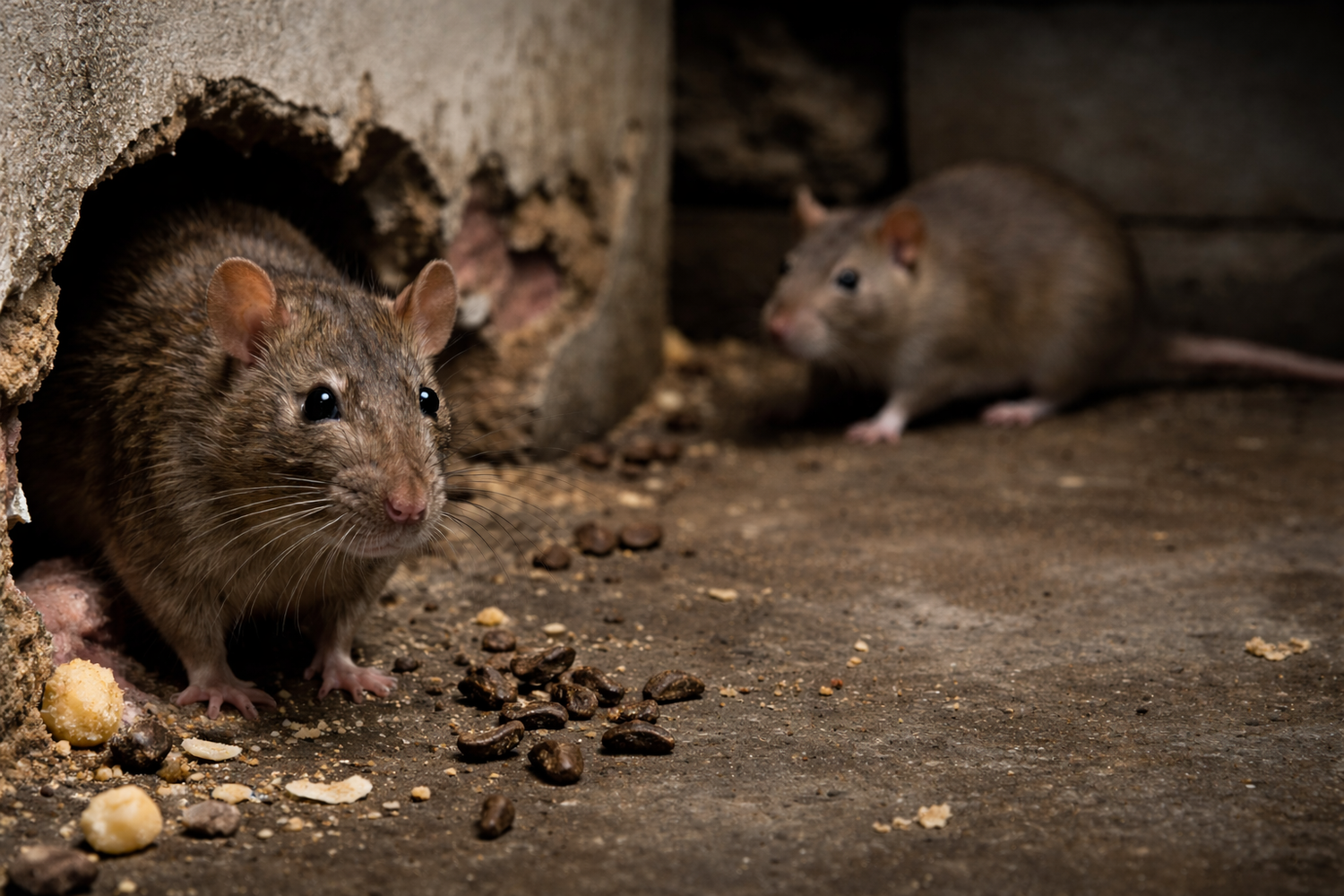
Have you heard scraping sounds in the walls, found gnaw marks on woodwork, or spotted droppings in the basement? Then there is a strong chance you have rats in your house. It is a problem that more people experience than most would think — and the faster you act, the easier it is to solve.
This guide gives you everything you need to know: how to recognize a rat hole, why rats come inside, what risks they pose, and how to effectively get rid of them — and keep them away.
How Do You Know You Have Rats in Your House?
Rats are nocturnal and shy animals that often manage to establish themselves thoroughly before being discovered. If you recognize any of these signs, you should take it seriously:
- Scraping or scurrying sounds in walls, ceilings, or under floors — especially at night.
- Droppings: dark, elongated pellets (8–20 mm) along walls, behind refrigerators, or in storage spaces.
- Gnaw marks on woodwork, cables, packaging, or insulation.
- Grease marks along the baseboards — rats rub against walls and leave dark marks.
- Smell of urine, especially in enclosed spaces such as basements or attics.
- Nests made of shredded materials: paper, fabric, insulation — often hidden in dark corners.
- Rats visible during the day — a sign of a severe infestation.
If you find droppings or gnaw marks — expect that more rats are already living there than you think. A female can give birth to up to 50 young per year.
Why Do Rats Come Into the House?
Rats seek three things: food, water, and shelter. Your home often offers all three. There is no single factor that drives rats indoors — it is usually a combination of circumstances.
Season and Weather
In autumn, as temperatures drop, rats actively seek their way inside. This is the most common period for rat invasions in Swedish homes. However, rats can establish themselves at any time of year if conditions are favorable enough.
Access to Food
Open rubbish bins, bird feeders, compost containers without tight-fitting lids, fruit that has fallen from trees, and pet food left outdoors are all attractants. Rats can smell food from a great distance and systematically make their way toward the source.
Entry Points in the Building
A rat can squeeze through an opening of just 2–3 cm. Common entry points include cracks in the foundation, gaps around pipes and cables, broken ventilation grilles, open air vents, and holes around windows and doors. The house rat is also an able climber and can find its way in high up on the facade.

What risks do rats bring in the home?
Rats are not just unpleasant — they are a real problem for health, finances, and safety. Here are the most important risks to be aware of:
Health Risks
Rats spread disease through droppings, urine, and bites. In Sweden, salmonella and leptospirosis (Weil's disease) are the most common infections. Rat droppings can also cause allergies and worsen asthma, particularly in children.
Property Damage
Rats gnaw constantly — their teeth grow throughout their entire lives and must continually be worn down. This means chewed electrical cables (with the risk of fire as a consequence), damaged insulation, holes in wooden structures, and destroyed water pipes. The cost of repairs can quickly run into tens of thousands of kronor.
Fire Risk
Chewed electrical cables are one of the most common causes of house fires in Swedish villas. It is a risk that is easily underestimated — and one that rats can create without you noticing until it is too late.
How do you get rid of rats in the house?
There are several methods — and the best solution often combines multiple measures. The most important thing is to act quickly and methodically.
1. Find and seal the entry points Before taking any measures against the rats inside the house, you must prevent more from getting in. Walk around the house and inspect the foundation, ventilation openings, pipe runs, and corners where building components meet. Seal them with steel wool, concrete, or rat-proof mesh — rats can gnaw through plastic and wood but not steel.
2. Remove food and attractants Rats thrive where there is food. Temporarily remove bird feeders, store rubbish in sealed containers, pick up fruit that falls from trees, and store pet food indoors in airtight containers. Without access to food, rats have less motivation to stick around.
3. Traps Rat traps are effective for smaller infestations. Choose metal snap traps over glue traps, and place them along walls and behind cupboards where rats move. Use bait such as nut paste or peanut butter. Check and empty traps daily.
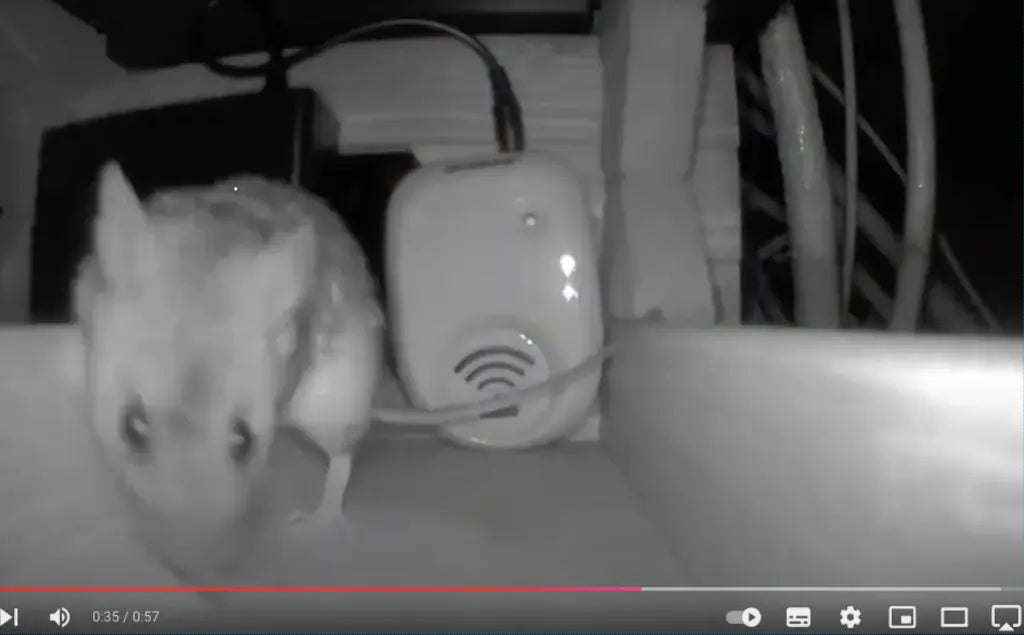
4. Ultrasound and repellent technology Repellent technology based on ultrasound and electromagnetic fields can act as a preventative measure and complement other efforts. Repello's technology is scientifically validated and designed to disrupt rats' communication and sense of orientation without affecting pets or humans.
5. Contact a pest control professional In the case of a severe infestation, or if you are unable to resolve the problem on your own, it is time to hire a certified pest controller. They can map the infestation, use approved rodenticide, and ensure that the rats are eliminated and kept away.
How do you prevent rats in the house?
The best rat protection is preventative measures. These routines dramatically reduce the risk:
- Inspect the house foundation and facade once a year — seal any cracks and gaps immediately.
- Keep the outdoor environment tidy: no stacked firewood, rubbish, or materials that rats can hide in close to the house.
- Trim back bushes and hedges that grow toward the facade — rats climb along them.
- Store rubbish, compost, and food in sealed, rat-proof containers.
- Install rat-proof mesh on ventilation openings and drains.
- Complement with a preventative repellent system — such as Repello — for continuous protection.
Common mistakes when trying to get rid of rats
Many people make the mistake of implementing isolated measures without looking at the bigger picture. Here are the most common errors:
- Not sealing the entry points — you remove the rats already inside but more will come in.
- Placing traps incorrectly — not along walls or in the rats' natural movement patterns.
- Giving up too early — rats learn and can avoid new traps for up to a week.
- Ignoring the outdoor environment — if there is food and shelter outside, you will constantly attract new rats.
- Waiting too long — the longer the infestation continues, the harder and more expensive it is to resolve.
Frequently asked questions about rats in the house
Can rats get in through the drain?
Yes. Rats, particularly the brown rat, are excellent swimmers and can make their way up through the toilet. It is uncommon but does occur. Rat-proof drain covers are available to buy and are recommended if you live in an older property.
How long does it take to get rid of rats?
It depends on the size of the infestation. A small infestation can be resolved in 1–2 weeks with the right measures. A larger, established population can take 4–8 weeks and often requires professional help.
How many rats typically live in a house?
If you see one rat, it is likely that there are more. A rat family can consist of 5–15 individuals and the numbers can grow quickly. Do not assume it is a single rat.
Is it the municipality's responsibility to deal with rats?
In Sweden, it is the property owner's responsibility to deal with rats on their own property. The municipality is responsible for rats in public spaces. Contact your local authority's environmental office if you suspect the problem originates from public land.