
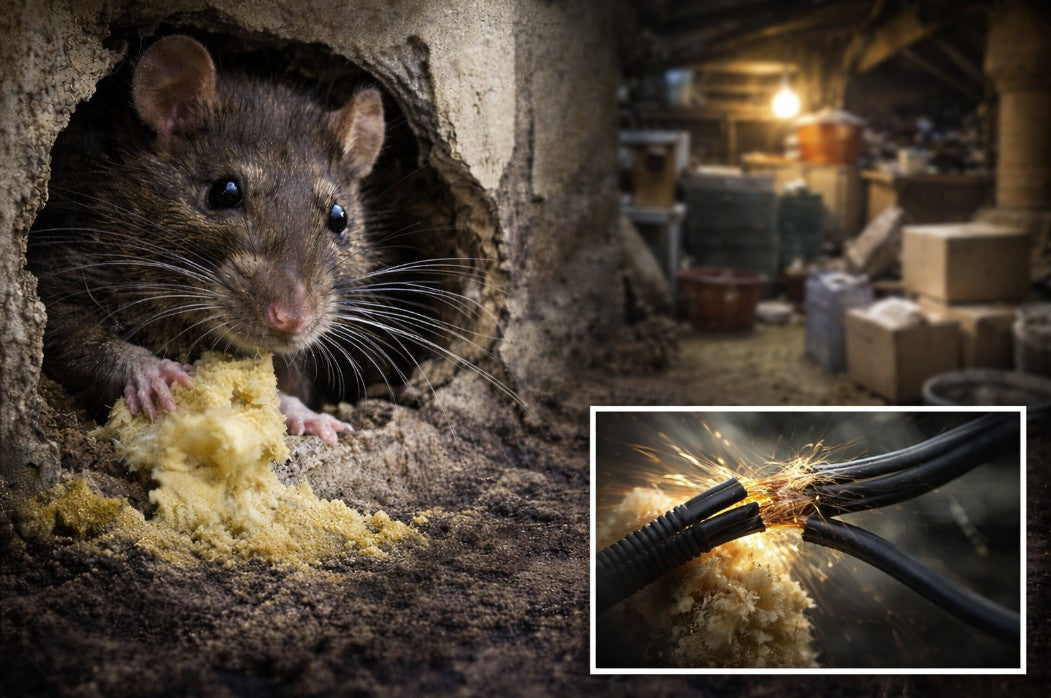
It often starts with a sound. Then suddenly they're everywhere. Here's where they go — and why researchers says that sound could change everything.
There's something about the sound that makes it especially unsettling.
Because once it has started — you just can't let it go.
A rustling from inside the wall. A faint gnawing in the ceiling. A clicking that always shows up when the house is at its quietest. Many people first try to convince themselves it's the wind, or that the house is just "settling." But there's a reason the same thought so often strikes people immediately:
"It's rats."
And what makes the situation so frustrating is that rats are almost never visible in the early stages. They are experts at moving unseen — through insulation, behind walls, under floors, in crawl spaces and in attics where people rarely look.
By the time you start seeing clear signs, they are usually already well established.
These are the places they hide — and you never think to look
Many people assume rats mainly stick to garages or storage rooms. But in reality, they seek out places where they can get three things at once: warmth, shelter and undisturbed space. That makes houses perfect — especially during the colder months.
Rats commonly make their way to:
- Insulation in walls and ceilings (ideal for nests and tunnels)
- Crawl spaces and under floors (cool, protected and undisturbed)
- Behind kitchen units and appliances (warmth + sometimes food)
- Attics, sheds and storage rooms (quiet, dark and rarely checked)
And once they're settled in… things can move fast.
Because rats aren't just "an animal in the house." They're an entire operation. They build tunnels, move materials, create nests and can in some cases cause damage that becomes costly to deal with.
👉 Do you suspect rats in your house? Find the solution here!
The sign that gives it all away — before it's too late
It's easy to think you need to actually see a rat to know.
But in reality there is one sign that almost always comes first: the sound.
That rustling that makes you stop in your tracks. The gnawing you hear when you're trying to sleep. Moving sounds that feel "too big" to be a mouse.
This is where many people make a mistake: they wait.
You don't want to believe it. You hope it will go away. But rats don't work like that.
If they have found a place where they can go undisturbed, they won't just disappear. On the contrary, their numbers can grow — and suddenly you discover droppings, gnaw marks or torn insulation.
And by then, you're already in the next phase.
Here's the turning point: why sound can actually change everything
What has caught many people's attention lately is that researchers believe rat behavior can be influenced through sound and frequencies.
Rats live in a world where sound isn't just "background noise." It's a language. It's a warning system. It's how they navigate and interpret their surroundings.
And that's precisely why it's possible to create an environment that feels uncomfortable for them — a place where they simply don't want to stay.
This is where Repello comes in.
Because Repello is built on a research-based method that uses sound to influence rats' willingness to remain in an area.
And that's exactly why it has become so interesting to homeowners.
Because when people have tried classic traps, bait and solutions that only deal with "one rat at a time," the idea of something that influences behavior at a fundamental level becomes very appealing.
👉 Find out how Repello works against rats
"Many have tried everything — but this is different"
One big reason Repello stands out from many other solutions is that the method isn't about "catching" a rat — it's about creating a protective barrier that makes them not want to settle in the first place.
And that's exactly the what many homeowners are looking for.
Because it's not just the rats themselves that are the problem. It's the feeling of never getting any peace. Walking around listening. Wondering what's happening behind the wall. Not knowing whether it's going to get worse.
When people feel like they've tried "everything," it becomes especially compelling when a solution is also backed by university research and testing — something that inspires confidence.
Here's what you should do right now if you hear the sound
If you hear rustling, gnawing or clear "movement sounds" in walls or ceilings, the advice is simple: act immediately. Because once rats get a foothold, the problem can grow quickly.
To stay one step ahead you need to:
- Seal up and reduce access to food
- Find a solution that makes rats not want to stay
It's in that second point that Repello becomes relevant.
Why more and more people are choosing Repello
There's a reason people are talking about Repello in homeowner groups and comment sections.
It comes down to a combination of three things:
- It's built on a different approach than traps and poison
- It's about influencing behavior — not just "removing one rat"
- It's backed by research, which gives people the confidence to believe in it
And for anyone who has heard that sound in the wall, it's easy to understand why the interest is so strong.
Because once you've had rats in your house, you never want to end up there again.