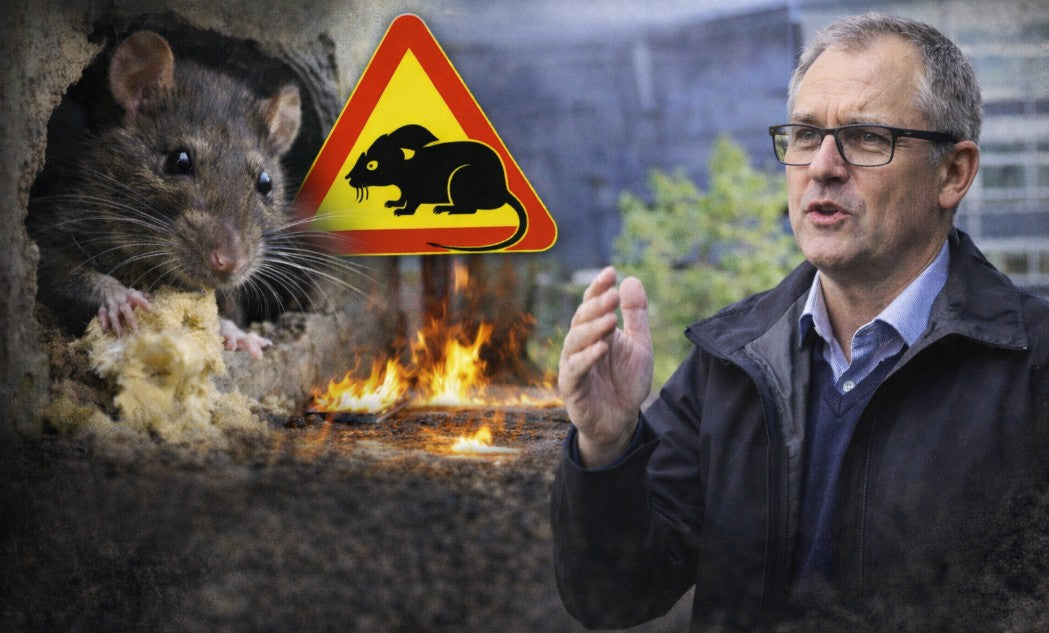
A new research-based signal — tested by the Swedish University of Agricultural Sciences — makes rats and mice flee in a panic. Now more and more homeowners are choosing the winning method before the problems even have a chance to start.
Rats and mice cause extensive damage in Swedish homes every year — often without being noticed until it's already too late. They can destroy insulation, gnaw through electrical cables and build nests inside the structure of the house. And many homeowners are caught off guard when they discover that rodent damage isn't always covered by their insurance.
That's why more and more people are now choosing to protect their home in advance — with a new method that has gained attention following tests at the Swedish University of Agricultural Sciences (SLU).
👉 Protect your house before the problem starts - read more about Repello here!
Repello was developed by a professor — by using the rats' own "warning language"
Repello is built on research from Luleå University of Technology, where Professor Örjan Johansson and his team studied how rats communicate and respond to different types of sound.
The goal was not to create yet another ordinary repeller — but to find a signal that rats instinctively interpret as danger.
The researchers discovered that rats use a specific warning sound in threatening situations. For other rats, it acts like a reflex — an immediate response deeply embedded in their behavior.
"It's a bit like when we touch a hot stove and pull our hand away without thinking. Rats react to their warning sound in the same instinctive way," says Örjan Johansson.
Once you notice that rats or mice have gotten in, it's easy to feel desperate. You try traps, sealing, poison — and often some kind of ultrasonic repeller.
But many find that the rodents keep coming anyway.
The Swedish Villa Owners' Association has scrutinized traditional sound repellers and is clear in its assessment:
"Sound is the language of animals, but sound repellers simply don't speak the language of pests. Mice and rats therefore ignore them," says Ulf Stenberg, chief legal counsel at the Swedish Villa Owners' Association.
That is why Repello is different.
It's not built on disturbing rodents with a generic sound — but on a signal that rats respond to instinctively.
Pilot study at SLU: observations decreased dramatically
Once the method had been developed, it was tested in collaboration with the Swedish University of Agricultural Sciences under real-world conditions.
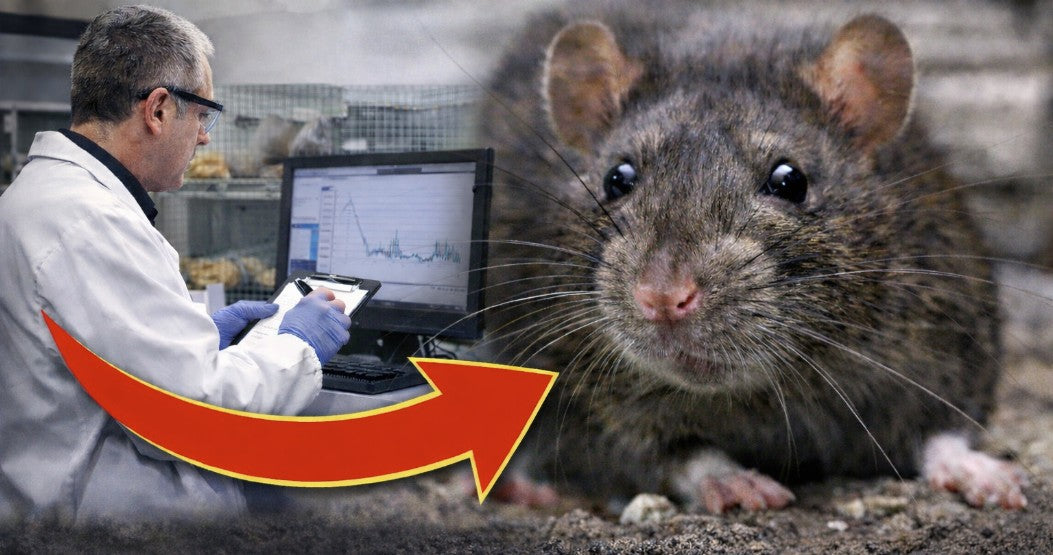
In the pilot study, rat activity was monitored using an infrared camera before and after the signal was activated.
The results attracted attention because the reaction was clear:
- Rats that entered turned back immediately
- Observations decreased dramatically when the signal was activated
- In one passageway, observations dropped by more than 90%
"What we saw was a clear behavioral change. They perceived the sound as a threat and withdrew immediately," says Professor Örjan Johansson.
👉 Find out how the Repello works!
Why homeowners use Repello as a preventative measure
The research-based method is what lies behind Repello — a solution used to protect vulnerable spaces in and around the home before rodents get a foothold.
Many people place Repello in:
- Crawl spaces
- Attics and cold lofts
- Garages
- Sheds and outbuildings
- Basements and utility rooms
The idea is simple: instead of trying to get rid of rats once the problem has already escalated, Repello is used to stay one step ahead — especially during winter when rodents are actively seeking warmth indoors.
👉Want to stay one step ahead of rats and mice? Discover Repello here!